The Black Death was a major plague that struck Europe, Asia, and North Africa in the mid-1300s. A plague is a fast-spreading disease that affects large populations. The Black Death is often linked to the bacterium Yersinia pestis, which can spread through fleas that live on rats. It reached many regions between 1346 and 1353 and caused great loss of life.
Many historians believe the plague began in Central Asia. From there, it moved along trade routes, including the Silk Road, which was a long network of paths used for travel and trade between Asia and Europe. The disease also spread on ships that carried goods across the Mediterranean Sea. As ships arrived in ports, infected rats and fleas brought the plague into crowded towns. Once the plague reached a community, it could spread quickly from person to person.
The Black Death caused several types of illness. One form, called bubonic plague, produced swollen areas on the body known as buboes. These were often found near the neck, armpit, or groin. Another form, called pneumonic plague, affected the lungs and could spread through the air when a sick person coughed. A third form, called septicemic plague, spread in the blood. All forms were dangerous and often deadly in the 1300s.
The plague had a major effect on medieval Europe. Many towns lost large parts of their population. Farms and workshops sometimes lacked workers, and some trade routes slowed down or closed. With fewer people available to work, the relationship between landowners and workers changed. In some regions, workers asked for higher pay or left the land to search for better conditions. These changes added pressure to systems such as feudalism, which was the social structure that linked lords and peasants.
Leaders in Europe reacted in different ways. Some rulers ordered people to stay away from crowded markets or to avoid travel. Others tried to clean streets or isolate sick households. Some groups searched for explanations and turned to religion, while others blamed certain communities, which led to violence and persecution. These responses show how people in the 1300s struggled to understand and manage a disease that moved quickly.
By the late 1300s, the first major wave of the Black Death came to an end. However, plague outbreaks continued to appear in Europe for centuries, though usually on a smaller scale. The Black Death remains one of the most significant events in medieval history because it led to long-term changes in population, work patterns, and society across many regions.
Black Death
Level
readlittle.com
Major plague in medieval Europe
What We Can Learn
- The Black Death was a major plague that spread across continents.
- It moved along trade routes and through ships carrying infected rats and fleas.
- The disease appeared in several forms, including bubonic and pneumonic plague.
- It caused major social and economic changes in medieval Europe.
Related Reads

Thomas Malthus
British thinker on population growth

Mongol Empire
Largest land empire in history

Silk Road
Ancient trade routes across continents

Tang dynasty
Powerful empire of medieval China
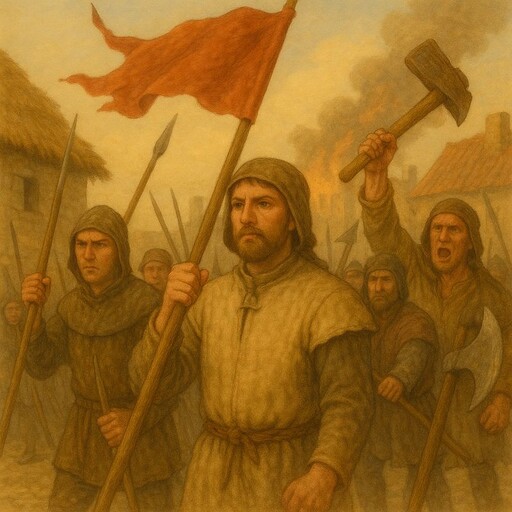
Peasants' Revolt
English uprising of 1381

Edward III
A long-reigning medieval English king

Starfish
Sea stars that regenerate and reshape reefs

Health
The state of body and mind well-being

Bacteria
Tiny living things that can do big things