Constantinople was an important city located on a narrow waterway between Europe and Asia. It stood where the Bosporus strait meets the Golden Horn, a natural harbor. Because of this position, the city controlled sea routes between the Black Sea and the Mediterranean Sea. For many centuries, Constantinople was a center of government, trade, and culture in the eastern Mediterranean.
The city was first founded around 657 BCE by Greek settlers and was called Byzantium. In 330 CE, the Roman emperor Constantine I rebuilt and expanded the city. He renamed it Constantinople, meaning "City of Constantine." Constantine made it the capital of the eastern Roman Empire. He also called it New Rome, because it was meant to continue Roman traditions in the east.
After the western Roman Empire weakened, Constantinople became the capital of what is now called the Byzantine Empire. This empire was the eastern continuation of the Roman Empire and lasted for more than 1,000 years. The city was ruled by emperors who used Roman law, Greek language, and Christian religion. One famous building from this period is the Hagia Sophia, a large church built in the 500s.
Constantinople was well protected by strong defenses. The most famous were the Theodosian Walls, long stone walls built in the 400s. These walls helped protect the city from many attacks. The city was often under siege, which means surrounded by enemy forces. Despite this, Constantinople survived for centuries because of its walls, navy, and supplies brought in by sea.
Trade was a major part of life in Constantinople. Merchants from Europe, Asia, and Africa brought goods such as silk, spices, grain, and metals. Markets and ports were busy, and coins from many regions were used. The city’s location allowed it to collect taxes and control trade routes. This made Constantinople one of the richest cities of the medieval world.
In 1453, Constantinople was captured by the Ottoman Empire under Sultan Mehmed II. This event marked the end of the Byzantine Empire. The city later became known as Istanbul. It continued to be an important capital under Ottoman rule. Today, Istanbul remains a large and active city, and its long history as Constantinople is still visible in its buildings and layout.
Constantinople
Level
readlittle.com
Imperial city between Europe and Asia
What We Can Learn
- Constantinople was founded as Byzantium and later renamed.
- It served as the capital of the Byzantine Empire.
- Strong walls protected the city for centuries.
- The city fell to the Ottoman Empire in 1453.
Related Reads
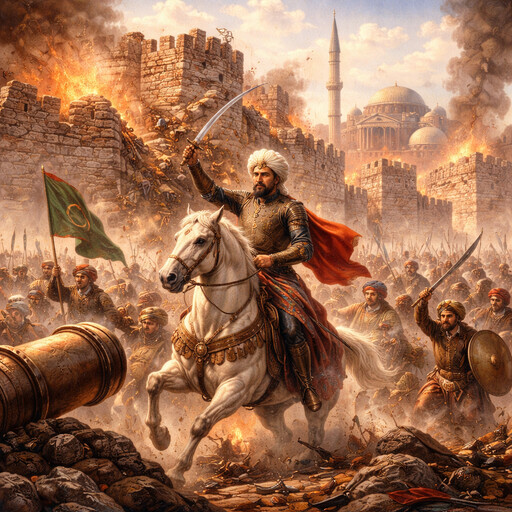
Fall of Constantinople
Ottoman capture of Constantinople in 1453
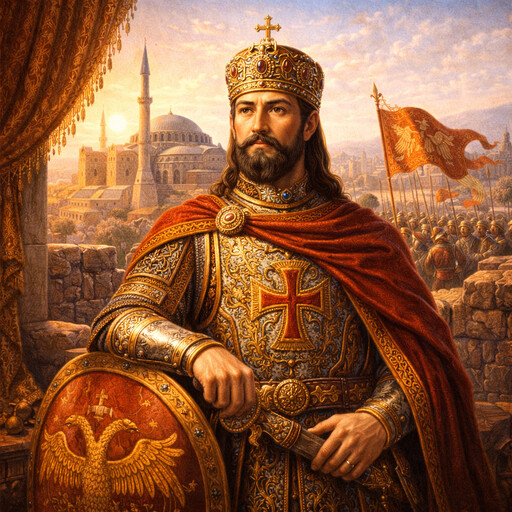
Constantine XI Palaiologos
Last emperor of the Byzantine Empire
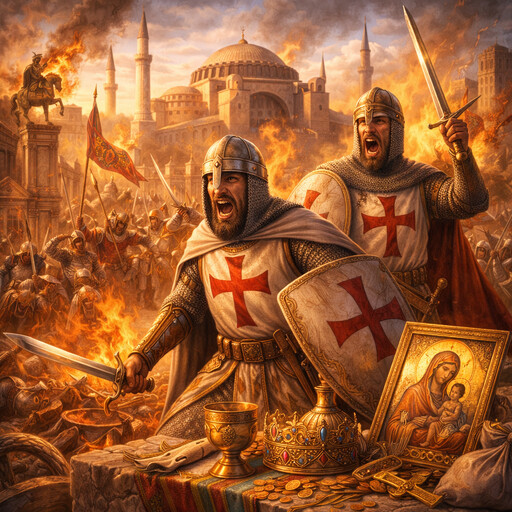
Sack of Constantinople
Crusaders capture Constantinople in 1204
Jerusalem
Ancient city in the Middle East
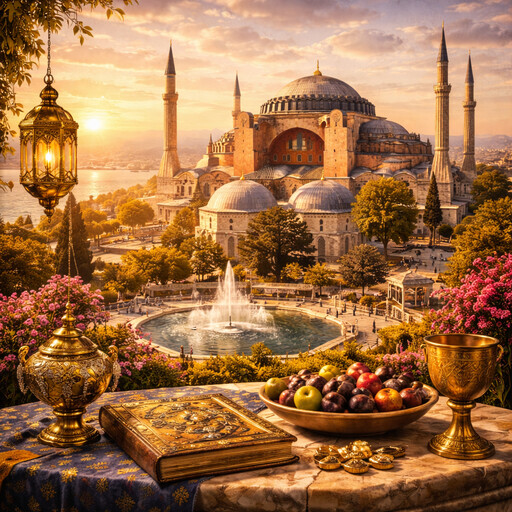
Hagia Sophia
Historic building in Istanbul
Baghdad
Historic capital on the Tigris River

Chang'an
Ancient capital of imperial China