The Battle of Tsushima was a large naval battle fought in May 1905 during the Russo-Japanese War. A naval battle is a fight between ships at sea. The battle took place in the waters near the Tsushima Strait, which lies between Korea and Japan. Two large fleets met there. One fleet belonged to the Empire of Japan, and the other belonged to the Russian Empire. The battle ended with the destruction of most of the Russian fleet and became one of the most important sea battles in history.
The Russo-Japanese War began in 1904. It was a war between Russia and Japan over control of land and influence in East Asia, especially in Korea and Manchuria. Manchuria is a large region in northeastern China. Japan had already won several battles on land and at sea. Russia decided to send its Baltic Fleet, a large group of warships based in Europe, all the way to East Asia. The ships sailed thousands of miles around Africa and Asia. The long journey caused many problems. Ships broke down, crews became tired, and supplies were limited.
The Japanese fleet was led by Admiral Tōgō Heihachirō. An admiral is a high-ranking naval officer who commands fleets. Tōgō prepared his ships carefully. Japanese crews trained often and knew the local waters well. The Russian fleet was led by Admiral Zinovy Rozhestvensky. When the Russian ships reached the Tsushima Strait, they were slower and less prepared. On May 27, 1905, the Japanese fleet attacked as the Russians tried to pass through the strait.
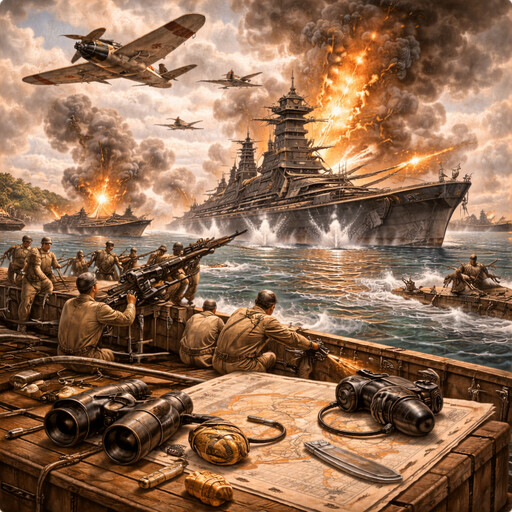
During the battle, Japanese ships used speed, clear signals, and accurate gunfire. They surrounded parts of the Russian fleet and fired from a distance. Many Russian ships were damaged or sunk. Some ships caught fire, while others exploded after being hit. Several Russian vessels tried to escape but were chased and destroyed. By the end of the battle, most of the Russian fleet had been sunk, captured, or forced to surrender. Only a few ships escaped.
The Battle of Tsushima ended on May 28, 1905. Japan lost only a small number of ships and sailors. Russia lost most of its fleet and many sailors were killed or captured. The defeat shocked Russia and the rest of the world. It showed that a modern Asian nation could defeat a major European power. The battle also showed the importance of modern warships, training, and communication at sea.
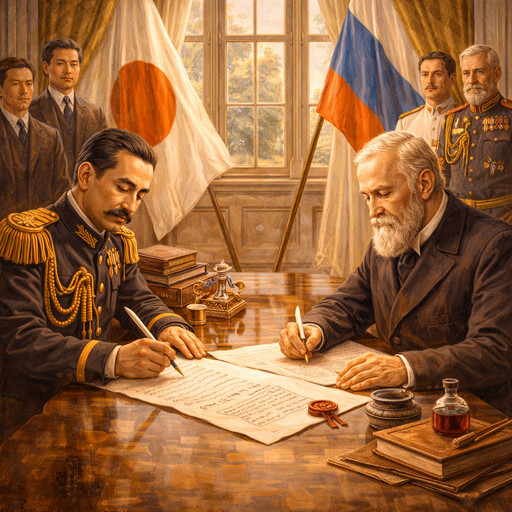
After the battle, the Russo-Japanese War soon came to an end. Peace talks followed, and a treaty was signed later in 1905. The Battle of Tsushima became a key example studied by naval officers around the world. It marked the end of older naval styles and the rise of modern steel warships with long-range guns. The battle remains one of the most decisive naval victories in history.
Battle of Tsushima
Level
readlittle.com
Decisive naval battle of 1905
What We Can Learn
- The battle was fought between Japan and Russia in 1905
- It took place in the Tsushima Strait near Japan
- Japan destroyed most of the Russian fleet
- The battle changed modern naval warfare