Boris Yeltsin was a Russian politician who served as the first president of the Russian Federation from 1991 to 1999. A president is the head of state of a country. Yeltsin came to power during a time of major change, when the Soviet Union was breaking apart. The Russian Federation, often called Russia, became an independent country in 1991. Yeltsin played a central role in this transition. His presidency focused on building new political and economic systems after many years of communist rule.
Boris Nikolayevich Yeltsin was born on 1 February 1931 in Butka, a village in the Ural Mountains region of Russia. At that time, Russia was part of the Soviet Union. His family worked in construction and farming. Yeltsin studied engineering at the Ural Polytechnic Institute. Engineering is the study of designing and building structures and machines. After graduating, he worked as a construction manager. He later joined the Communist Party, which controlled the Soviet government and economy.
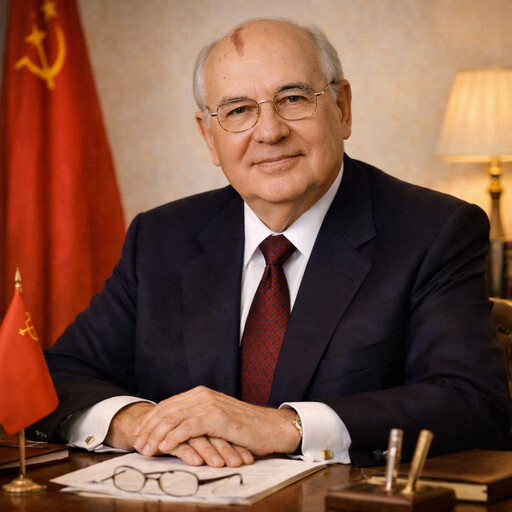
Yeltsin rose through the ranks of the Communist Party during the 1960s and 1970s. He became a regional leader in Sverdlovsk, now called Yekaterinburg. In the 1980s, he moved to Moscow and entered national politics. He supported reforms introduced by Soviet leader Mikhail Gorbachev. These reforms aimed to change the economy and allow more openness in public life. Over time, Yeltsin became critical of the old party system and called for faster change.
In 1991, Boris Yeltsin was elected president of the Russian Soviet Federative Socialist Republic. Later that year, the Soviet Union officially ended. This event is often called the collapse of the Soviet Union. Yeltsin became president of the new Russian Federation. Russia began changing from a planned economy, controlled by the government, to a market economy, where prices are set by supply and demand. This transition caused economic problems, including inflation, which is a rapid rise in prices, and shortages of goods.
Yeltsin’s presidency included political conflicts and reforms. In 1993, there was a serious crisis between the president and the Russian parliament. Parliament is a group of elected lawmakers. The conflict led to armed clashes in Moscow before a new constitution was approved. A constitution is a set of basic laws that describes how a country is governed. The new constitution increased the powers of the president. Yeltsin was re-elected in 1996 and continued to lead Russia during difficult economic conditions.
Boris Yeltsin resigned as president on 31 December 1999. He named Vladimir Putin as acting president. Acting president means a temporary leader until an election is held. After leaving office, Yeltsin lived quietly and stayed mostly out of politics. He died on 23 April 2007 at the age of 76. Boris Yeltsin is remembered as the first president of Russia and as a leader during the country’s transition after the end of the Soviet Union.
Boris Yeltsin
Level
readlittle.com
First president of the Russian Federation
What We Can Learn
- Boris Yeltsin was the first president of the Russian Federation.
- He served as president from 1991 to 1999.
- He led Russia after the end of the Soviet Union.
- His presidency included major political and economic changes.
Related Reads
Russian Civil War
Conflict after the Russian Revolution
Communist International
Global organization of communist parties
Mikhail Gorbachev
Last leader of the Soviet Union
Nikita Khrushchev
Soviet leader during the Cold War
Vladimir Lenin
Leader of the Russian Revolution
Leon Trotsky
Revolutionary leader of early Soviet Russia