Vladimir Lenin was a Russian political leader and thinker who played a central role in the Russian Revolution of 1917. He was born on 22 April 1870 in Simbirsk, a city in the Russian Empire. His birth name was Vladimir Ilyich Ulyanov. He later used the name Lenin as a pseudonym, which is a name used instead of a real name. Lenin helped create a new form of government in Russia after the fall of the monarchy.
Lenin grew up in a well-educated family. He studied law at university and became involved in political activity at a young age. He was influenced by ideas based on the work of Karl Marx, which focused on class struggle and the role of workers. Lenin joined groups that opposed the Russian tsar, the emperor who ruled Russia at the time. Because of his activities, he was arrested and later sent into exile, which means forced to live away from home.
During years of exile in Europe, Lenin continued to write and organize political groups. He became a leader of the Bolsheviks, a faction within a larger socialist movement. A faction is a smaller group within a larger organization. The Bolsheviks believed in a tightly organized party to lead a revolution. When unrest increased in Russia during World War I, Lenin returned to Russia in 1917.
In October 1917, the Bolsheviks led an uprising in Petrograd, which is now called Saint Petersburg. This event is known as the October Revolution. The Bolsheviks overthrew the provisional government that had replaced the tsar earlier that year. After this, Lenin became the head of the new government. He held the title of chairman of the Council of People’s Commissars, which was the main executive body.
After the revolution, Russia faced a civil war between the Bolshevik government and opposing forces. This conflict is called the Russian Civil War. It lasted from 1918 to 1921. During this time, the government took control of major industries and land. In 1922, the Union of Soviet Socialist Republics, or the Soviet Union, was officially formed. Lenin became its first leader.
Lenin’s health declined in his later years. He suffered several strokes, which are sudden interruptions of blood flow to the brain. Because of this, he gradually withdrew from daily leadership. Vladimir Lenin died on 21 January 1924 near Moscow. After his death, his body was preserved and placed in a mausoleum in Red Square. Lenin remained an important historical figure in the early history of the Soviet Union.
Vladimir Lenin
Level
readlittle.com
Leader of the Russian Revolution
What We Can Learn
- Vladimir Lenin was born in 1870 in the Russian Empire
- He led the Bolsheviks during the 1917 revolution
- Lenin became the first leader of the Soviet state
- He died in 1924 after years of illness
Related Reads

Revolutions of 1848
Uprisings across Europe in 1848

Peter the Great
Russian ruler who reshaped his country

Ivan III
Founder of a unified Russian state
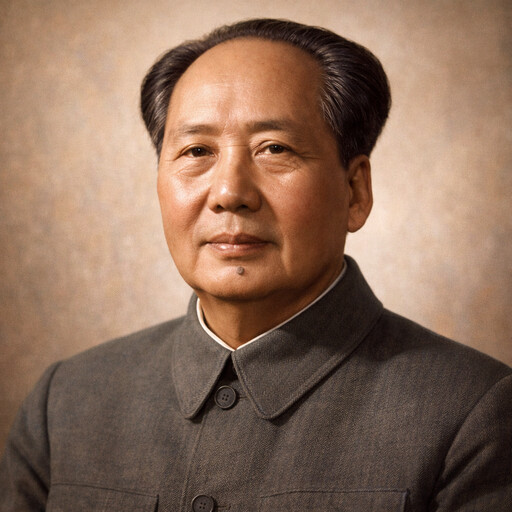
Mao Zedong
Leader of modern Communist China
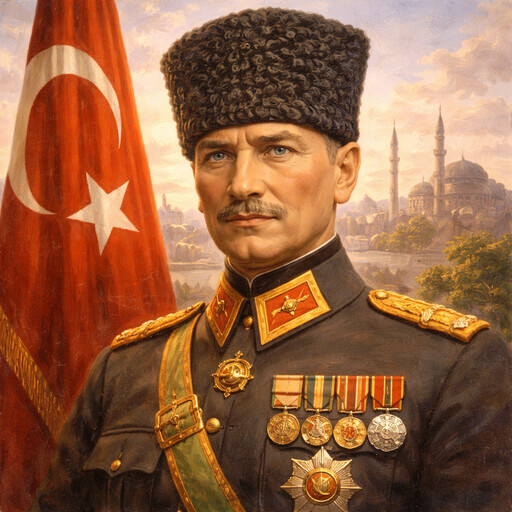
Mustafa Kemal Atatürk
Founder of modern Turkey
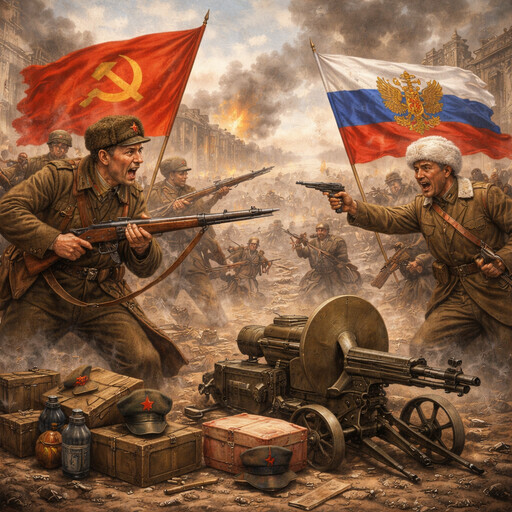
Russian Civil War
Conflict after the Russian Revolution
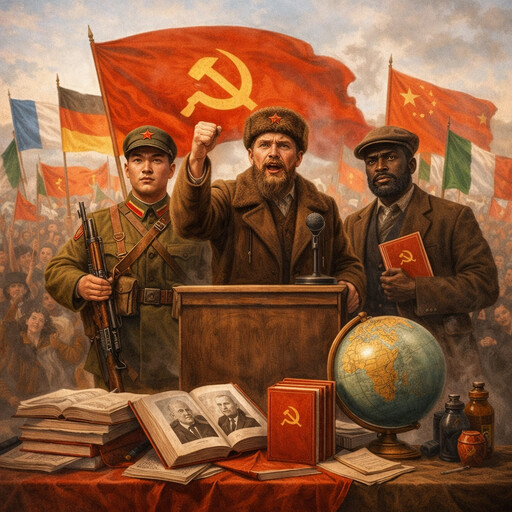
Communist International
Global organization of communist parties
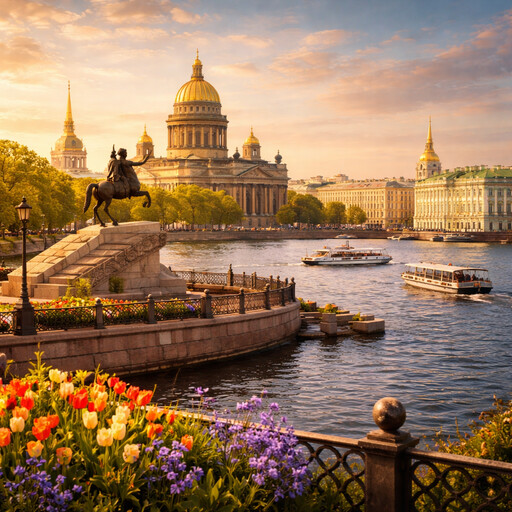
Saint Petersburg
Historic city in northwest Russia
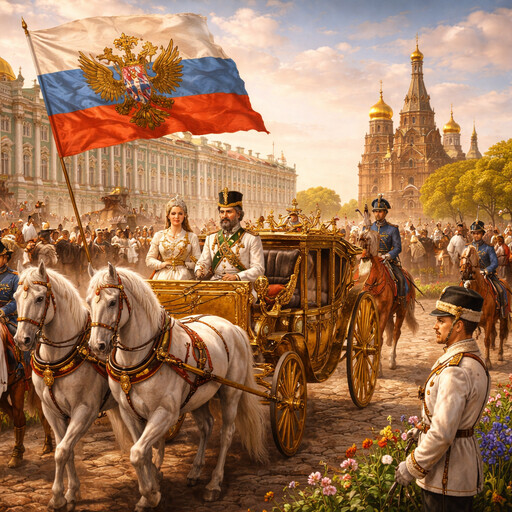
Russian Empire
Large empire ruled by Russian monarchs
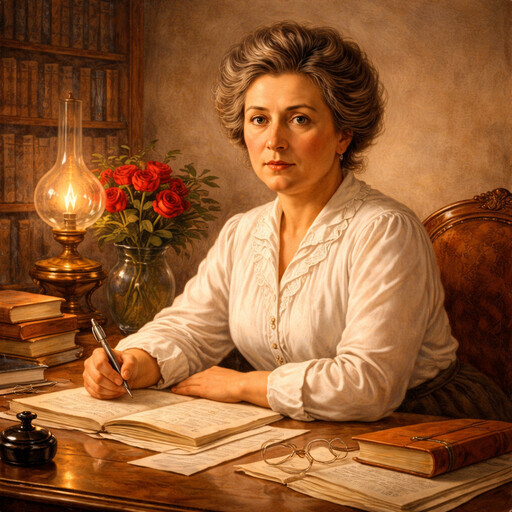
Rosa Luxemburg
Political thinker and activist in Europe
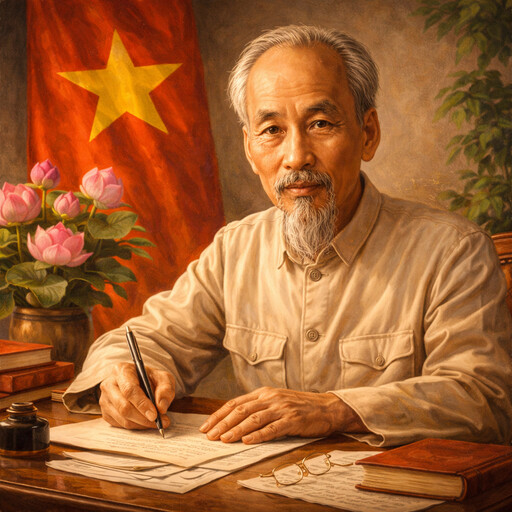
Ho Chi Minh
Leader of Vietnamese independence movement
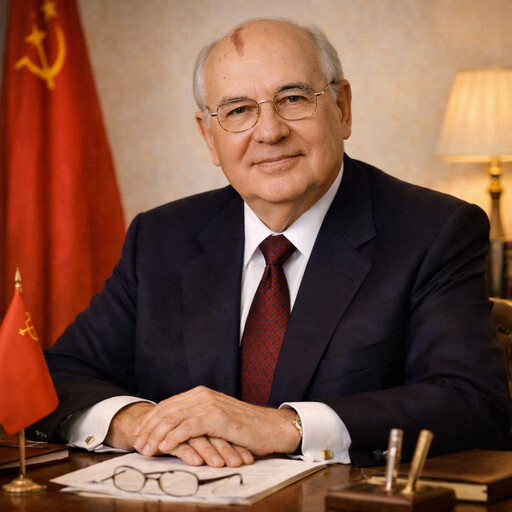
Mikhail Gorbachev
Last leader of the Soviet Union