Sumer was one of the earliest civilizations known to history. It developed in a region called southern Mesopotamia, which is now part of modern-day Iraq. Mesopotamia means "land between rivers" in Greek. The two main rivers were the Tigris and the Euphrates. Sumer existed from about 3500 BCE to around 2300 BCE. BCE means "Before Common Era" and is used to date events in ancient history. The Sumerians built some of the world’s first cities and developed early systems of writing, government, and trade.
The land of Sumer was mostly flat and dry, but the rivers provided water for farming. The Sumerians built canals, which are human-made waterways, to bring river water to their fields. This allowed them to grow crops such as barley and wheat. Farming supported large populations and helped cities grow. Major Sumerian cities included Uruk, Ur, Lagash, and Eridu. Each city was a city-state, which means it was a city with its own government and surrounding land. These city-states were independent and often competed with one another.
Sumerian society was organized into different social groups. At the top were kings and priests. A king ruled the city-state and led its army. Priests were religious leaders who worked in temples. Below them were merchants, craftsmen, and farmers. Craftsmen made tools, pottery, and jewelry. Merchants traded goods such as grain, cloth, and metals with other regions. At the bottom were enslaved people, who had few rights. The Sumerians believed in many gods, which is called polytheism. Each city had a main god or goddess believed to protect it.
One of the most important Sumerian achievements was writing. The Sumerians developed a writing system called cuneiform. Cuneiform used wedge-shaped marks pressed into wet clay with a reed tool. At first, writing was used to keep records of trade and supplies. Over time, it was also used for laws, stories, and prayers. Scribes were trained writers who learned cuneiform. They attended special schools and spent many years practicing. Thousands of clay tablets written in cuneiform have survived and provide information about Sumerian life.
Sumerians also made advances in technology and science. They used the wheel for transport and pottery making. They developed early forms of math to measure land and count goods. The Sumerian number system was based on 60, which is why an hour has 60 minutes and a circle has 360 degrees. They also created calendars based on the movement of the Moon. In architecture, they built large temple towers called ziggurats. A ziggurat was a stepped structure made of mud bricks and used for religious purposes.
Over time, Sumerian city-states weakened because of wars and changes in leadership. Around 2300 BCE, Sumer was conquered by Sargon of Akkad, who created the Akkadian Empire. An empire is a large group of territories ruled by one leader. Although Sumer as an independent civilization ended, Sumerian ideas continued to influence later cultures in Mesopotamia. Their writing, laws, and technologies were adopted and adapted by other civilizations. Sumer remains important in history as one of the earliest known complex societies.
Sumer
Level
readlittle.com
One of the earliest civilizations
What We Can Learn
- Sumer was one of the earliest known civilizations.
- It developed in southern Mesopotamia between two rivers.
- Sumerian city-states had their own governments and gods.
- Writing, farming, and early technology were key features of Sumer.
Related Reads
Herodotus
Ancient Greek writer of early history
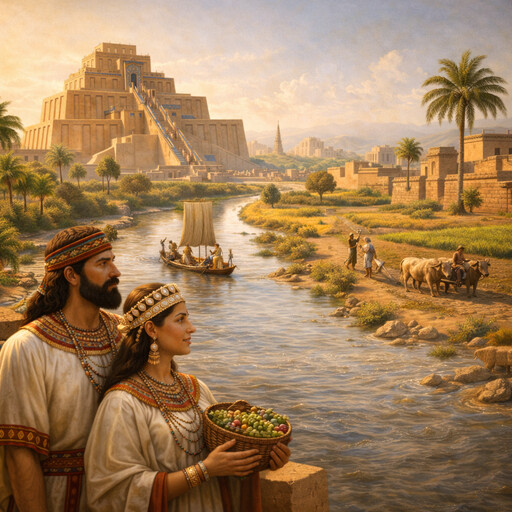
Mesopotamia
Ancient land between two rivers

Mediterranean Sea
Sea between Europe, Africa, and Asia
Inca Empire
A powerful empire of the Andes
Ancient Greece
Early civilization of Greek city-states
Ancient Rome
A powerful civilization of the ancient Mediterranean