Mesopotamia was an ancient region in the Middle East where some of the first human civilizations formed. The name Mesopotamia comes from Greek words meaning "land between rivers." These rivers were the Tigris and the Euphrates. Today, this area is mostly part of modern-day Iraq, with parts in Syria, Turkey, and Iran. Mesopotamia is often called one of the cradles of civilization because organized societies developed there very early, starting around 3500 BCE.
The geography of Mesopotamia played an important role in its history. The land between the rivers was flat and often dry, but the rivers provided water for farming. Each year, the rivers flooded and left behind rich soil. Soil is the top layer of earth where plants grow. People learned to control the water by building canals and irrigation systems. Irrigation means bringing water to crops by human-made methods. This allowed farmers to grow crops such as barley and wheat. Farming supported larger populations and led to the growth of towns and cities.
Several early civilizations developed in Mesopotamia over time. The earliest known were the Sumerians, who built cities such as Uruk and Ur. Later groups included the Akkadians, Babylonians, and Assyrians. Each group ruled parts of Mesopotamia at different times. These civilizations formed city-states and empires. An empire is a group of lands ruled by one leader or government. Although these groups spoke different languages and had different customs, they shared many ideas and technologies.
Mesopotamian societies developed early systems of government and law. Kings ruled cities and led armies. Laws were written to organize daily life and settle disputes. One famous example is the Code of Hammurabi, created by the Babylonian king Hammurabi. A code is a set of written rules. The code was carved on stone and placed in public spaces. Writing itself was another major development. The Sumerians created a writing system called cuneiform, which used wedge-shaped marks on clay tablets.
Religion was an important part of life in Mesopotamia. People believed in many gods, which is called polytheism. Each god was thought to control parts of nature or daily life, such as rain, farming, or war. Large temples called ziggurats were built in city centers. A ziggurat was a tall, stepped structure made of mud bricks. Priests worked at temples and performed rituals. Religion influenced laws, festivals, and the actions of rulers.
Over many centuries, control of Mesopotamia changed as new groups arrived and older ones declined. Wars, droughts, and changes in river paths affected cities. By around 500 BCE, Mesopotamia was ruled by foreign empires such as the Persian Empire. Although Mesopotamia as a single region no longer existed, its ideas continued to influence later civilizations. Early writing, farming methods, and systems of law from Mesopotamia became part of the foundation of ancient history.
Mesopotamia
Level
readlittle.com
Ancient land between two rivers
What We Can Learn
- Mesopotamia was located between the Tigris and Euphrates rivers.
- It was home to some of the earliest civilizations.
- Farming and irrigation supported large cities.
- Writing, law, and religion developed early in the region.
Related Reads
Herodotus
Ancient Greek writer of early history
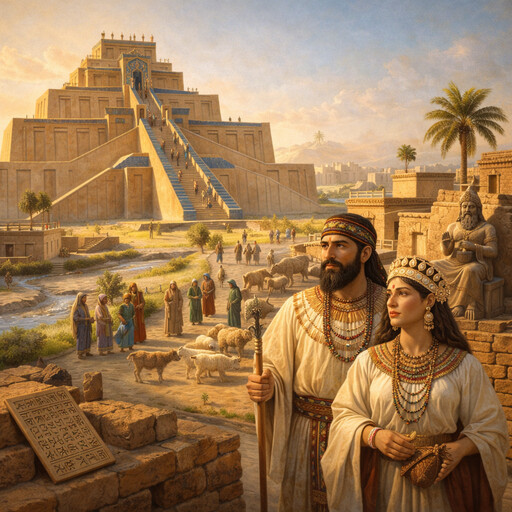
Sumer
One of the earliest civilizations

Mediterranean Sea
Sea between Europe, Africa, and Asia
Inca Empire
A powerful empire of the Andes
Ancient Greece
Early civilization of Greek city-states
Ancient Rome
A powerful civilization of the ancient Mediterranean
Islam
A major world religion