The Battle of Marathon was a famous battle fought in 490 BCE during the early wars between ancient Greece and the Persian Empire. The battle took place on a plain near the town of Marathon, northeast of Athens. A plain is a large area of flat land. Greek soldiers, mainly from the city-state of Athens and the nearby city of Plataea, faced a much larger Persian army. The Persians had crossed the sea to invade Greece. The battle ended with a Greek victory and became an important event in ancient Greek history.
The background of the battle is linked to the expansion of the Persian Empire. The Persian Empire was a large empire that stretched across much of Asia. It was ruled at the time by King Darius I. Several Greek cities in Asia Minor had rebelled against Persian rule. Athens supported these cities, which angered the Persian king. As a result, Darius I planned to punish Athens and bring mainland Greece under Persian control. The Persian army landed near Marathon because the area was suitable for their forces and close to Athens.
The Greek army was much smaller than the Persian force. Greek soldiers were mainly hoplites. A hoplite was a heavily armed foot soldier who carried a spear, a shield, and wore armor. The Persians used a different style of fighting, with lighter armor and many archers. Archers are soldiers who fight using bows and arrows. The Greek army was led by several generals, including Miltiades. He played an important role in planning the Greek attack.
Instead of waiting behind city walls, the Greek commanders decided to fight the Persians at Marathon. The Greek army formed a line and charged toward the Persian forces. This reduced the effect of Persian arrows. The Greeks strengthened their wings, which are the sides of an army formation, and weakened the center. When the battle began, the Greek center slowly fell back, while the stronger wings pushed forward. The wings then turned inward and surrounded the Persian troops. This movement caused confusion among the Persian soldiers.
The battle ended with the Persian army retreating toward their ships. Many Persian soldiers were killed or drowned while trying to escape. The Greek losses were much smaller. After the battle, the Greeks feared that the Persians might sail directly to Athens. According to tradition, a messenger named Pheidippides ran from Marathon to Athens to report the victory. This run later inspired the modern marathon race, although details of the story vary between sources.
The Battle of Marathon did not end the conflict between Greece and Persia. Later Persian kings launched new invasions, leading to battles such as Thermopylae and Salamis. However, the victory at Marathon showed that the Persian army could be defeated by Greek city-states working together. The battle remains a well-known example of ancient warfare and is often studied for its tactics and historical setting.
Battle of Marathon
Level
readlittle.com
Ancient battle between Greece and Persia
What We Can Learn
- The battle was fought in 490 BCE near Marathon in Greece.
- Greek forces defeated a larger Persian army.
- The battle was part of early wars between Greece and Persia.
- It influenced later events in ancient Greek history.
Related Reads

Polish–Soviet War
War over borders after World War I
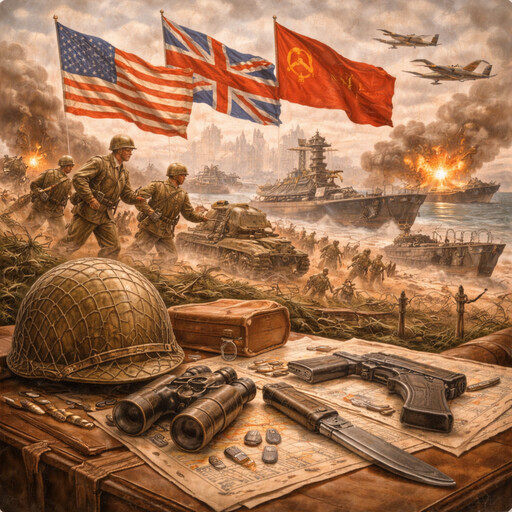
World War II
Global war from 1939 to 1945
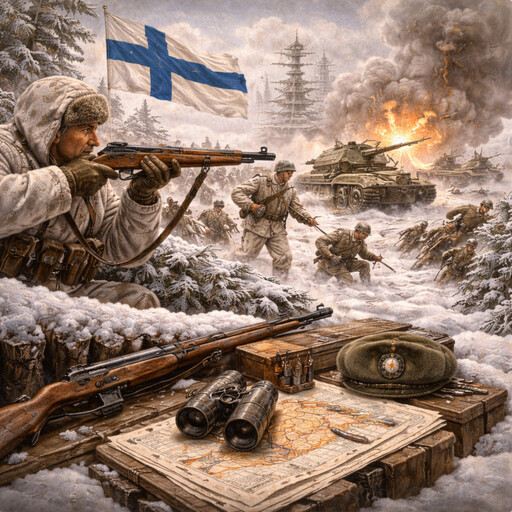
Winter War
Conflict between Finland and Soviet Union
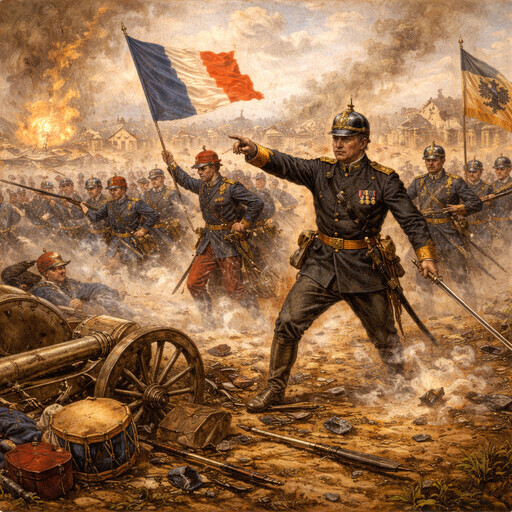
Franco-Prussian War
Conflict between France and Prussia
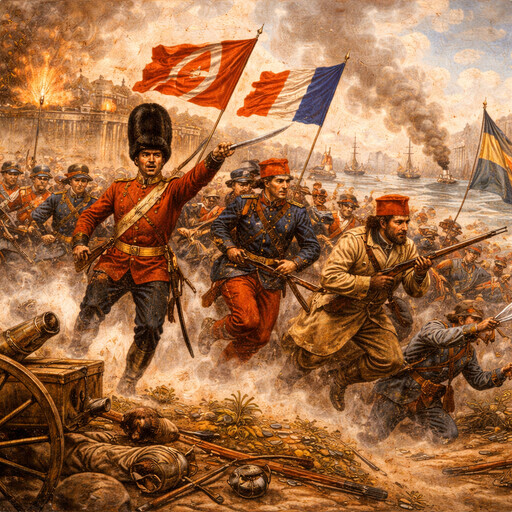
Crimean War
Conflict over power near the Black Sea
World War I
Global conflict of the early twentieth century
Greco-Persian Wars
Wars between Greek states and Persia
Battle of Thermopylae
Greek defense at a narrow mountain pass