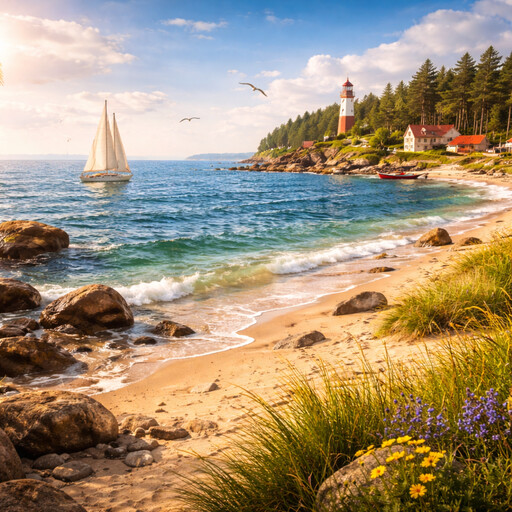
The Black Sea is a large body of water surrounded by Europe and Asia. It lies north of Turkey and south of Eastern Europe. Several countries have coastlines on the Black Sea, including Turkey, Bulgaria, Romania, Ukraine, Russia, and Georgia. The sea is connected to the Mediterranean Sea by narrow waterways, which allow ships to travel between these seas. Because it is mostly enclosed by land, the Black Sea is called an inland sea.
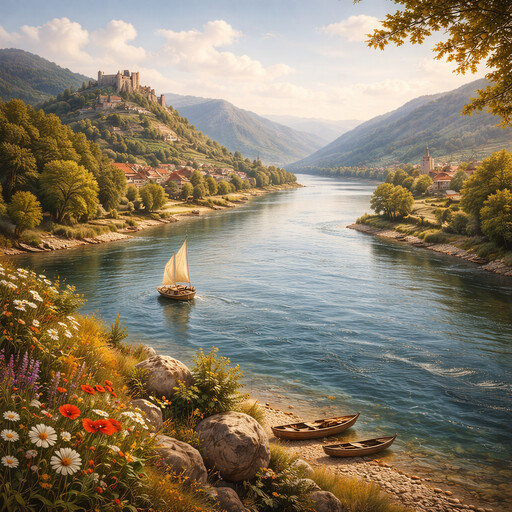
The Black Sea connects to the Mediterranean Sea through the Bosporus Strait, the Sea of Marmara, and the Dardanelles Strait. A strait is a narrow stretch of water that connects two larger bodies of water. These connections make the Black Sea part of an important route for sea travel. Rivers such as the Danube, Dnieper, and Don flow into the Black Sea, bringing fresh water from far inland.
The Black Sea has a special water structure. The upper layer contains oxygen and supports fish and other sea life. Below this layer, much of the water contains hydrogen sulfide, a gas that is harmful to most living things. Because of this, life exists mainly near the surface. This feature makes the Black Sea different from many other seas. Shipwrecks at deeper levels are often well preserved because there are few organisms to break them down.
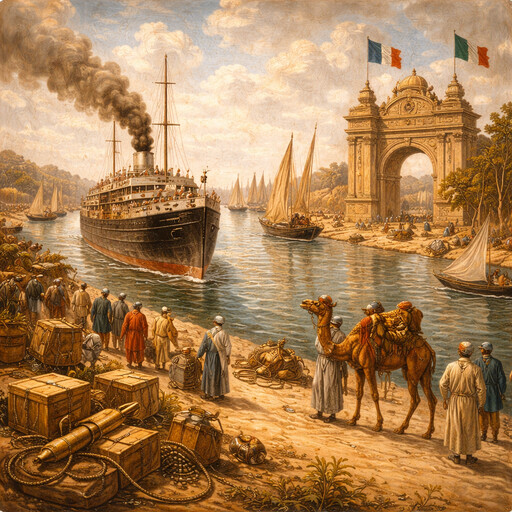
People have lived around the Black Sea for thousands of years. Ancient Greek settlers built cities along its shores and used the sea for trade. Later, the Roman Empire and the Byzantine Empire controlled parts of the coastline. During the Middle Ages and later periods, the Ottoman Empire became a major power in the region. Control of Black Sea ports was important for trade and defense.
In modern history, the Black Sea has been linked to major events. During the Crimean War in the 1850s, fighting took place near its shores. In the 20th century, the sea became important to countries of the Soviet Union. After the Soviet Union collapsed, new independent countries gained coastlines along the Black Sea. Today, the sea remains important for shipping, fishing, and regional security.
The Black Sea also has unique environmental features. Its limited connection to the open ocean affects water movement and salt levels. Environmental concerns include pollution from rivers and coastal cities. Several countries work together through agreements to protect the sea. The Black Sea continues to shape the geography, history, and daily life of the regions around it.
Black Sea
Level
readlittle.com
Large inland sea between Europe and Asia
What We Can Learn
- The Black Sea lies between Europe and Asia
- It connects to the Mediterranean through narrow straits
- Rivers from Europe flow into the sea
- Much of the deep water lacks oxygen