Climate is the average pattern of weather in a place over a long period of time, usually thirty years or more. It includes temperature, rainfall, wind, humidity, and other conditions of the atmosphere. Climate helps describe what kind of weather a place normally has, such as being hot and dry, or cold and snowy.
Climate is different from weather. weather describes what is happening in the atmosphere at a certain time, such as a rainy day or a sunny afternoon. Climate, on the other hand, shows what the weather is like most of the time in that area. For example, the desert has a dry and hot climate, while the arctic has a cold and icy climate.
Several factors affect a region’s climate. One major factor is its latitude, or distance from the equator. Areas near the equator, like tropical regions, receive more sunlight and are usually warmer. Areas closer to the poles receive less sunlight and are colder. Other factors include altitude (height above sea level), distance from oceans, and ocean currents, which can make some coastal areas warmer or cooler than expected.
Scientists classify climates into different groups using systems such as the Köppen climate classification. Common types include tropical, dry, temperate, continental, and polar climates. Each has its own pattern of temperature and precipitation. For example, tropical climates are warm and wet all year, while polar climates remain cold with snow and ice for most of the year.
Climate affects plants, animals, and people. The types of plants that grow in an area, such as cactus in deserts or pine trees in cold forests, depend on the climate. Animals also adapt to the climate of their habitats. People build homes, grow crops, and wear clothing that suit the climate where they live.
Over long periods, the earth’s climate can change. Natural events like volcanic eruptions and changes in the Earth's orbit can cause climate changes. In recent times, scientists study how human activities, such as burning fuels and cutting forests, may also affect the climate. Understanding climate helps people learn how living things adapt to different environments around the world.
Climate
Level
readlittle.com
The long-term pattern of weather
What We Can Learn
- Climate is the long-term average of weather in a place.
- It includes temperature, rainfall, wind, and other atmospheric conditions.
- Latitude, altitude, and distance from oceans affect climate.
- Different regions have different types of climate, like tropical or polar.
Related Reads
Aurora
Colorful lights in Earth’s sky
Ireland
Island nation with rich landscape
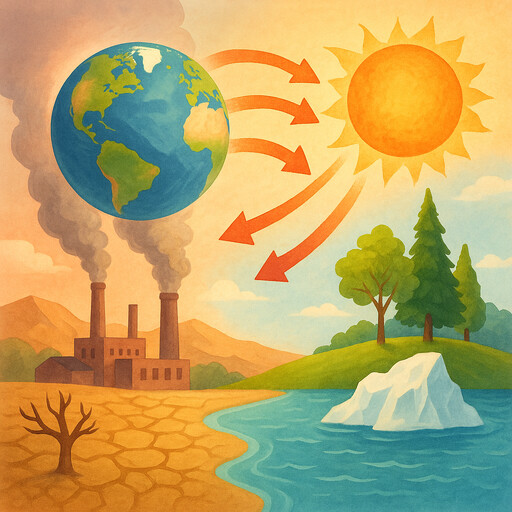
Climate Change
Changes in Earth’s long-term climate
Water
Essential liquid for life on Earth
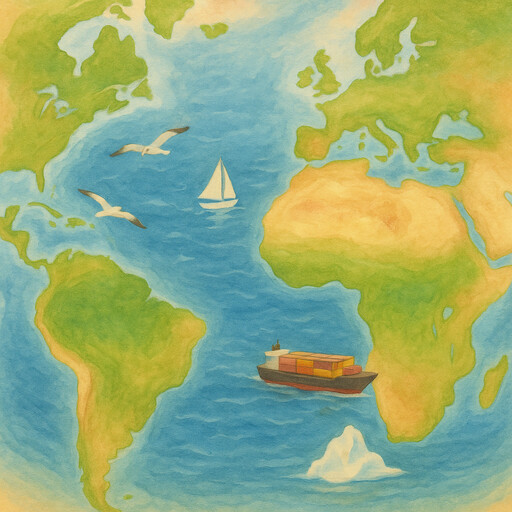
Atlantic Ocean
Busy ocean linking four continents

State of matter
The different forms that matter can take

Gas
A state of matter that spreads and fills space
Neptune
The distant blue planet of the Solar System

Liquid
A state of matter that flows and takes shape
Saturn
The ringed giant planet of the Solar System
Jupiter
The largest planet in the Solar System
Mars
The red planet of the Solar System