The Han dynasty was one of the most important dynasties in the history of China. It ruled from 206 BCE to 220 CE and lasted for more than four hundred years. A dynasty is a line of rulers from the same family. The Han dynasty came after the short Qin dynasty and kept China united for a long time. Many ideas and systems formed during the Han period continued to influence China long after the dynasty ended.
The Han dynasty began after the fall of the Qin dynasty. The Qin dynasty collapsed because of rebellions and strict rule. A former official named Liu Bang defeated rival leaders and became emperor in 206 BCE. He took the title Emperor Gaozu of Han. He reduced harsh laws and tried to bring stability to the empire. The Han government kept some Qin systems, such as a strong central government, but ruled in a less strict way.
The Han dynasty is often divided into two periods. The first period is the Western Han (206 BCE–9 CE), with its capital at Chang'an. The second period is the Eastern Han (25–220 CE), with its capital at Luoyang. Between these periods, a ruler named Wang Mang briefly took power and tried to create his own dynasty. His rule failed, and the Han dynasty was restored.
The Han government developed a system based on education and learning. Confucianism became the main guiding idea of the state. Confucianism is a system of thought based on the teachings of Confucius, which emphasized order, respect, and proper behavior. Officials were chosen based on learning and ability, not only family background. Schools were set up to teach classical texts. This helped create a group of educated officials called scholars.
During the Han dynasty, China expanded its territory and trade. The Han armies pushed the borders outward to the north, west, and south. Trade routes connected China to Central Asia and beyond. These routes later became known as the Silk Road. The Silk Road was a network of land routes used to exchange goods such as silk, horses, and metals. Through these routes, ideas and technologies also spread.
The Han dynasty ended in 220 CE. Over time, the central government weakened. Powerful families gained control of land, and corruption increased. Peasant uprisings and struggles among generals broke out. Finally, the empire split into separate states. Even after its fall, the Han dynasty remained a model for later Chinese dynasties. The name "Han" is still used today to describe the main ethnic group in China.
Han dynasty
Level
readlittle.com
Long-lasting dynasty of ancient China
What We Can Learn
- The Han dynasty ruled China for over four centuries.
- It followed the Qin dynasty and created long-term stability.
- Confucianism guided government and education.
- Trade expanded through routes later called the Silk Road.
Related Reads
No image
Monarchy
Government ruled by a royal family
Thomas Jefferson
Author and third U.S. president
Totalitarianism
A system of complete state control
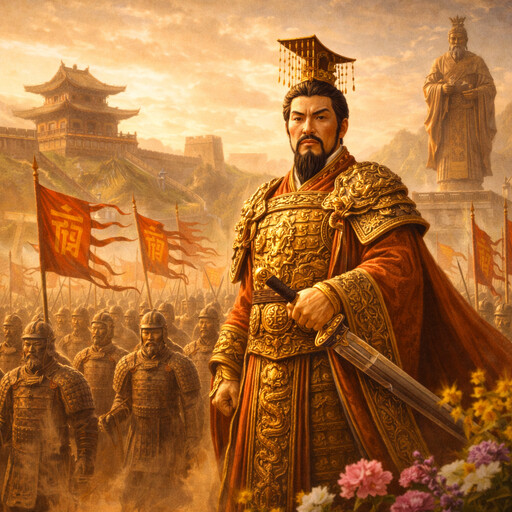
Qin dynasty
First imperial dynasty of China

Nationalism
Idea linking people to a shared nation
Jeremy Bentham
British thinker on law and society
Montesquieu
French thinker on laws and government

Jean-Jacques Rousseau
Enlightenment writer on society and government

John Locke
Thinker who wrote about mind and government

Thomas Cromwell
Chief minister to King Henry VIII

Athens
Ancient city of Greece
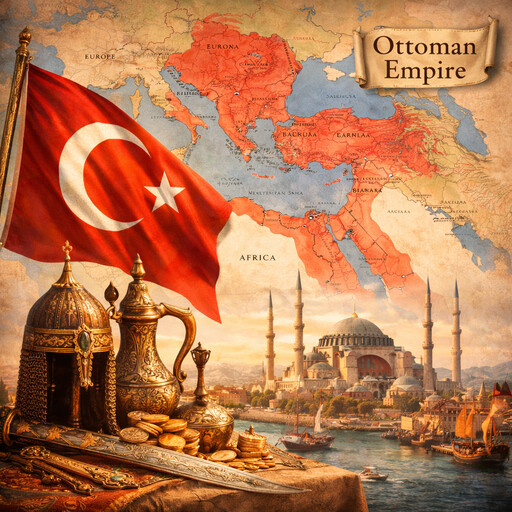
Ottoman Empire
A long-lasting empire across three continents