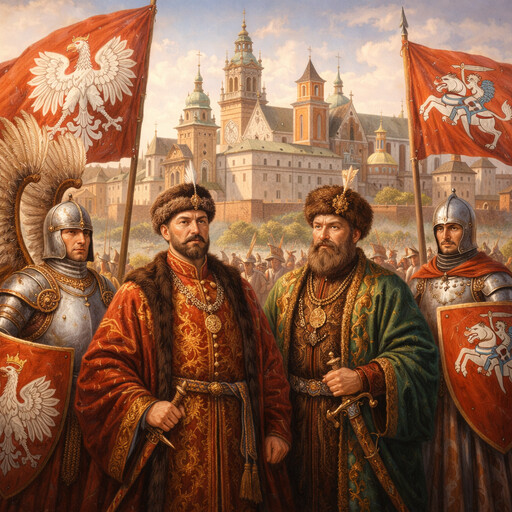
Kievan Rus was an early medieval state in eastern Europe. It existed from about the late 800s to the mid-1200s. The state was centered on the city of Kiev, which is now the capital of Ukraine. Kievan Rus' included lands that are part of modern Ukraine, Russia, and Belarus. It was not a single nation in the modern sense. Instead, it was a loose group of cities and regions ruled by related princes. These princes belonged to the Rurikid family, a ruling family that began with a leader named Rurik.
The origins of Kievan Rus' are linked to trade and travel. Traders from Scandinavia, known as Varangians, traveled south along rivers. A Varangian was a Viking who traveled east for trade or service. These rivers connected the Baltic Sea to the Black Sea. Kiev became an important center because it stood on these trade routes. The early rulers collected taxes and protected trade. Over time, Slavic peoples formed the main population of the state, while Varangians became part of local society.
Kievan Rus' was ruled by princes who controlled different cities. Kiev was usually the most important city. One well-known ruler was Vladimir the Great. In the year 988, Vladimir accepted Christianity from the Byzantine Empire. Christianity is a religion based on the teachings of Jesus Christ. After this event, many people in Kievan Rus' were baptized. Baptism is a religious ceremony that marks entry into the Christian faith. This decision linked Kievan Rus' closely with Byzantine culture, art, and writing.
Another important ruler was Yaroslav the Wise. He ruled during the early 1000s. Under his rule, Kievan Rus' reached a high point in power and organization. Laws were written down in a code called the Russkaya Pravda. A law code is a written set of rules used to govern society. Churches, schools, and libraries were built in Kiev and other cities. Writing and learning became more common among priests and officials.
Over time, Kievan Rus' became weaker. The state was divided among many princes, each ruling his own land. These divisions led to conflicts between regions. Trade routes also changed, reducing Kiev’s importance. In the 1200s, a new threat appeared from the east. Mongol armies invaded eastern Europe. In 1240, the city of Kiev was attacked and badly damaged. This event marked the end of Kievan Rus' as a united state.
After the fall of Kievan Rus', its lands developed in different ways. New states rose in the region, including the Grand Duchy of Moscow and the Kingdom of Galicia–Volhynia. The traditions of Kievan Rus', such as Orthodox Christianity, written law, and city life, continued in these later states. Kievan Rus' is remembered as a shared early history for several eastern European peoples.
Kievan Rus'
Level
readlittle.com
Early medieval state in eastern Europe
What We Can Learn
- Kievan Rus' was a medieval state centered on Kiev
- It developed along major river trade routes
- Christianity became official under Vladimir the Great
- The state declined after internal division and Mongol invasion