The Polish–Lithuanian Commonwealth was a large state in eastern Europe. It existed from 1569 until 1795. It was formed by a union between the Kingdom of Poland and the Grand Duchy of Lithuania. A union is an agreement that joins two political states. After the union, both lands shared one ruler and one parliament. The Commonwealth covered a wide area, including much of today’s Poland, Lithuania, Belarus, and Ukraine. For many years, it was one of the largest states in Europe.
The Commonwealth was created by an agreement called the Union of Lublin in 1569. This agreement joined Poland and Lithuania more closely than before. They had already shared a ruler, but now they shared a parliament, called the Sejm. A parliament is a group of people who meet to make laws. The king was chosen by election, not by birth alone. This system was unusual in Europe at the time. Many nobles, called the szlachta, had political rights. A noble is a person from a high social class, often owning land.
The government of the Commonwealth was often described as a republic of nobles. This means that political power was mainly held by the nobility. The king had limited power and had to follow the laws passed by the Sejm. One important rule was the liberum veto. This rule allowed any single member of the Sejm to stop a law by saying no. At first, this was meant to protect freedom. Over time, it made it hard to pass laws and weakened the government.
The Commonwealth was home to many different peoples and religions. Poles, Lithuanians, Ukrainians, Belarusians, Jews, and others lived there. Several religions were practiced, including Catholic Christianity, Orthodox Christianity, Protestant Christianity, and Judaism. For much of its history, the Commonwealth allowed religious freedom. This meant that people could follow different religions without punishment by the state. This was rare in Europe during the early modern period.
The Commonwealth faced many challenges over time. It fought wars with neighboring powers, including Sweden, Russia, and the Ottoman Empire. War is organized fighting between states. These wars damaged cities and farms. At the same time, the government became less effective because of political disagreements. Powerful neighbors began to interfere in its affairs. By the late 1700s, the Commonwealth was weak and could not defend itself well.
Between 1772 and 1795, the Polish–Lithuanian Commonwealth was divided and taken over by neighboring states. These events are known as the Partitions of Poland. Russia, Prussia, and Austria each took parts of the land. After the third partition in 1795, the Commonwealth no longer existed as an independent state. Its lands were ruled by other empires. Even after its end, the history of the Commonwealth remained important to the peoples of the region.
Polish–Lithuanian Commonwealth
Level
readlittle.com
A large early modern European state
What We Can Learn
- The Commonwealth united Poland and Lithuania in one state
- It had an elected king and a powerful parliament
- Many cultures and religions lived within its borders
- The state ended after being divided by neighboring powers
Related Reads
No image
Vienna
Capital city on the Danube River

Polish–Soviet War
War over borders after World War I

Munich Agreement
1938 agreement over Czechoslovak territory
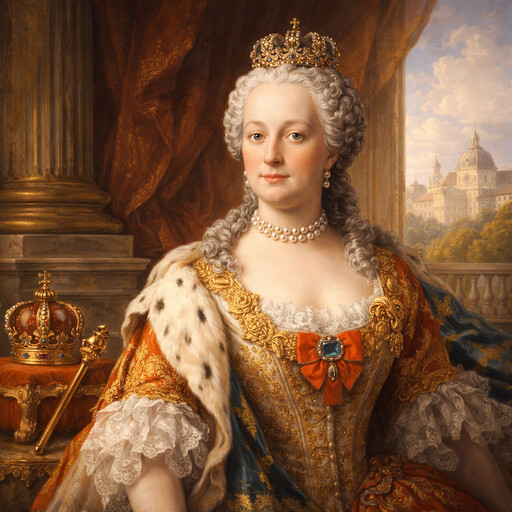
Maria Theresa
Powerful ruler of the Habsburg lands

Molotov–Ribbentrop Pact
Non-aggression agreement before World War II

Vilnius
Historic capital city of Lithuania

Revolutions of 1848
Uprisings across Europe in 1848
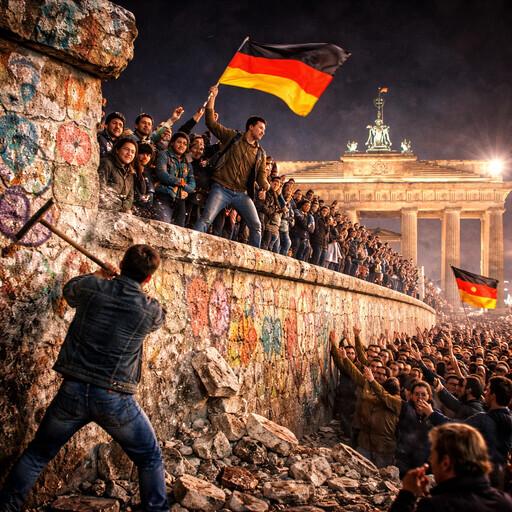
Fall of the Berlin Wall
End of Germany’s divided barrier
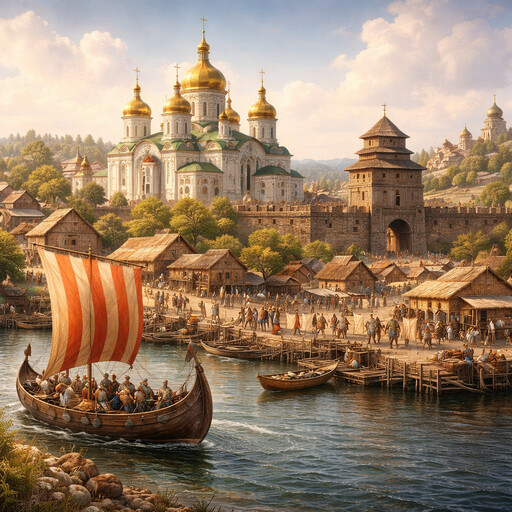
Kievan Rus'
Early medieval state in eastern Europe
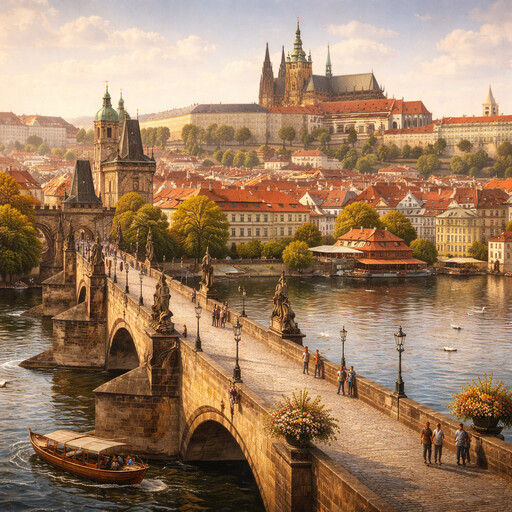
Prague
Historic capital city of the Czech Republic
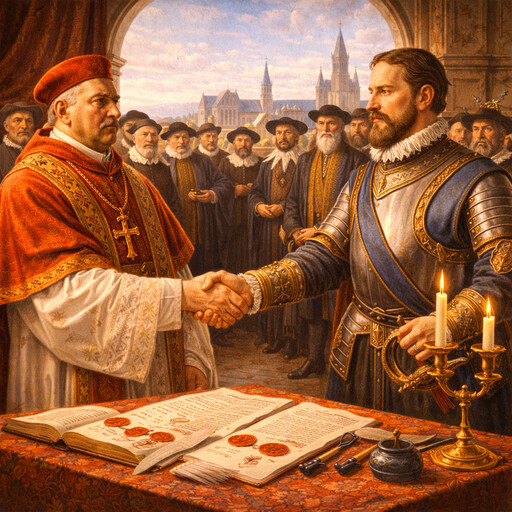
Peace of Westphalia
Treaties ending major European wars
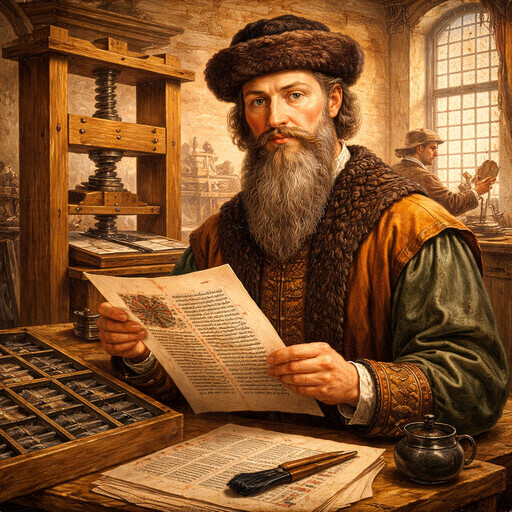
Johannes Gutenberg
Inventor of movable-type printing in Europe