Pope Clement XIII was a pope of the Roman Catholic Church in the middle of the 1700s. He ruled from 1758 until his death in 1769. His papacy occurred during a period when European governments were becoming more powerful and often challenged the authority of the church. Clement XIII is mainly remembered for his efforts to protect church institutions and traditions during these difficult years. His time as pope was marked by disagreements between the papacy and several Catholic rulers.
Pope Clement XIII was born in 1693 in Venice, a city-state in northern Italy. His birth name was Carlo della Torre di Rezzonico. He came from a noble family and received a strong education. He studied law, which is the system of rules used to govern society. After completing his studies, he entered church service. Over time, he held several important positions in the church. In 1737, he was made a cardinal. A cardinal is a senior church official who advises the pope and helps choose new popes.
In 1758, Carlo della Torre di Rezzonico was elected pope and took the name Clement XIII. As pope, he focused on maintaining church authority and traditions. One major issue during his reign involved relations between the church and Catholic monarchs. A monarch is a ruler such as a king or queen. Many rulers wanted more control over church affairs within their countries. These rulers believed that the church should be more closely guided by the state.
One of the most serious challenges of Clement XIII’s papacy concerned the Society of Jesus, also known as the Jesuits. The Jesuits were a religious order, meaning a group of priests who followed specific rules and missions. They were active in education, missionary work, and advising rulers. Several European governments accused the Jesuits of having too much influence. Countries such as France, Spain, and Portugal pressured the pope to suppress the order. To suppress means to officially end or shut down an organization.
Pope Clement XIII refused to suppress the Jesuits. He believed the accusations against them were unfair and defended their role in the church. His refusal increased tension between the papacy and Catholic governments. Some rulers responded by limiting church authority or removing church privileges in their lands. These actions reduced the pope’s influence in political matters. Clement XIII issued letters supporting the Jesuits and affirming church independence, but opposition continued to grow.
Pope Clement XIII died suddenly in 1769. He was buried in Rome, and his papacy ended without resolving the conflict over the Jesuits. After his death, the pressure on the church continued. His successor, Pope Clement XIV, later agreed to suppress the Jesuits in 1773. Clement XIII’s papacy is remembered as a time when the church faced strong challenges from expanding state power. His reign reflects the complex relationship between religion and politics in eighteenth-century Europe.
Pope Clement XIII
Level
readlittle.com
Eighteenth-century pope amid political pressure
What We Can Learn
- Ruled as pope from 1758 to 1769
- Born in Venice as Carlo della Torre di Rezzonico
- Defended church authority against state pressure
- Refused to suppress the Jesuit order
Related Reads
Edmund Burke
British statesman and political writer
United States Declaration of Independence
Statement announcing separation from British rule
Thomas Paine
Writer of revolutionary political pamphlets
Marquis de Lafayette
French officer in American independence
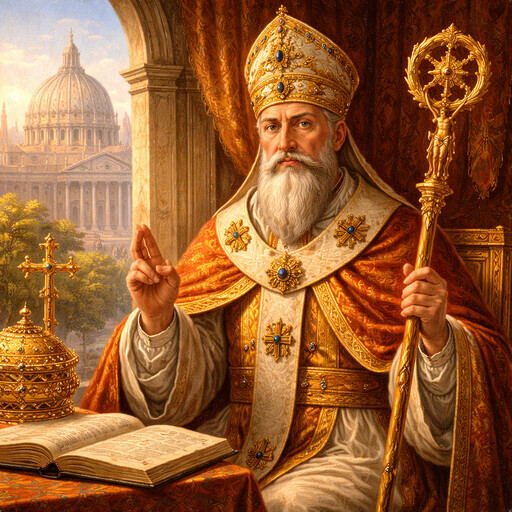
Pope Gregory VII
Medieval pope and church reformer
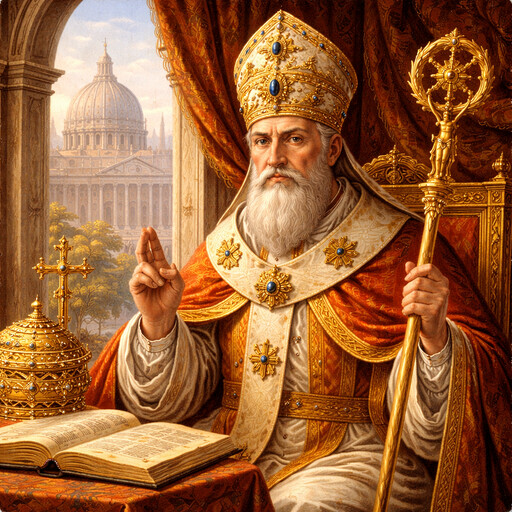
Pope Boniface VIII
Medieval pope and royal conflict

Pope Urban II
Medieval pope of the late 11th century

Pope Eugene III
Medieval pope during the Second Crusade

Philip II of Spain
King of a global Spanish empire