Venice is a city in northern Italy. It is famous for being built on many small islands in a shallow body of water called a lagoon. A lagoon is a coastal area where saltwater mixes with freshwater. Venice has canals instead of streets in many places. Boats are used for travel and transport. This unusual setting has shaped the city’s history and daily life.
The city of Venice began to form around the fifth century. People moved to the islands to escape invasions on the mainland. Over time, small settlements joined together and formed a city. Venice developed its own government and became known as the Republic of Venice. A republic is a state ruled by elected leaders, not by a king. Venice remained independent for many centuries.
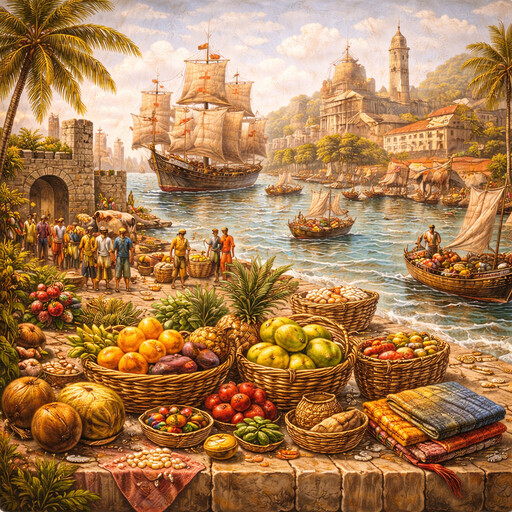
Venice became powerful because of trade. Its location allowed ships to travel easily between Europe and the eastern Mediterranean. Merchants from Venice traded goods such as silk, spices, glass, and metal. Trade routes connected Venice with cities in the Middle East and Asia. This made Venice wealthy and influential during the Middle Ages.
The city was governed by an official called the Doge. The Doge was chosen by leading families and ruled for life. Although the Doge was important, his power was limited by councils. This system helped prevent one person from controlling the state. Venice used laws and records to manage trade, ships, and public life.
Venice was also known for art and building. Large churches, palaces, and bridges were built using stone and marble. One famous building is St. Mark’s Basilica, located in the main square called St. Mark’s Square. Artists and architects worked for the government and wealthy families. The city became a center for painting, music, and printing.
In 1797, Venice lost its independence when it was taken by Napoleon Bonaparte. After this, it became part of other states and later joined modern Italy. Today, Venice is known for its historic buildings and canals. It remains a city shaped by water, trade, and long history.
Venice
Level
readlittle.com
City built on water
What We Can Learn
- Venice is built on islands in a lagoon.
- It was once an independent republic.
- Trade made Venice powerful and wealthy.
- The city used canals instead of roads.
Related Reads
No image
Boston
An early American coastal city
No image
Vienna
Capital city on the Danube River

Vilnius
Historic capital city of Lithuania
Dutch Golden Age
Period of Dutch global growth
Constantine XI Palaiologos
Last emperor of the Byzantine Empire

Mehmed II
Ottoman sultan who captured Constantinople

Pope Boniface VIII
Medieval pope and royal conflict

Fall of Constantinople
Ottoman capture of Constantinople in 1453

Pope Gregory VII
Medieval pope and church reformer
East India Company
British trading company that ruled India
Ibn Battuta
Great traveler of the medieval world
Manila
Capital city by a historic bay