Robert Koch (1843–1910) was a German doctor and scientist who studied germs that cause disease. He is known for proving that certain diseases are caused by specific bacteria. Bacteria are tiny living organisms that can only be seen with a microscope. Koch’s work helped doctors understand how diseases spread and how they can be identified.
Robert Koch was born in 1843 in Clausthal, a town in what is now Germany. He studied medicine at the University of Göttingen and later worked as a doctor in small towns. While working as a doctor, he used simple tools to study blood samples and tissues. At that time, many people still did not agree that germs caused disease. Koch carefully observed and recorded what he saw.
Koch became famous for his work on anthrax, a serious disease that affects animals and humans. He discovered that anthrax is caused by a specific bacterium. A bacterium is a single-celled living organism. Koch showed that this bacterium could move from one host to another and cause the same disease. This was strong evidence that germs cause illness.
Koch developed a set of rules called Koch’s postulates. A postulate is a rule or principle. These postulates explain how scientists can prove that a specific germ causes a specific disease. The rules include finding the germ in sick people, growing it in a laboratory, and showing that it causes disease again. These rules became very important in medical research.
Later, Koch studied other major diseases. He identified the bacteria that cause tuberculosis and cholera. Tuberculosis is a lung disease that spreads through the air. Cholera is a disease that spreads through contaminated water. His discoveries helped governments and doctors improve public health, such as water safety and hygiene.
Robert Koch received many honors for his work. In 1905, he won the Nobel Prize in Physiology or Medicine for his research on tuberculosis. He died in 1910 in Germany. Today, his name is used in medical textbooks and research centers. His work helped shape bacteriology, which is the study of bacteria.
Robert Koch
Level
readlittle.com
German doctor who studied disease-causing bacteria
What We Can Learn
- Robert Koch was a German doctor and scientist.
- He proved that specific bacteria cause specific diseases.
- He created Koch’s postulates to study disease.
- He identified the bacteria for anthrax, tuberculosis, and cholera.
Related Reads

Dutch Golden Age
Period of Dutch global growth

Antarctic Treaty System
Agreements governing Antarctica
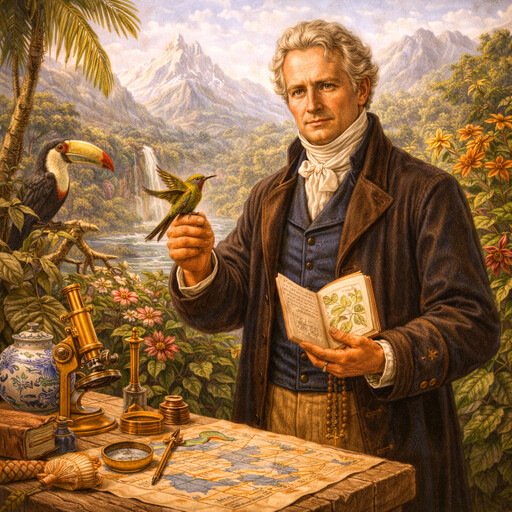
Alexander von Humboldt
Explorer of nature and the natural world

Botany
The study of plants and plant life
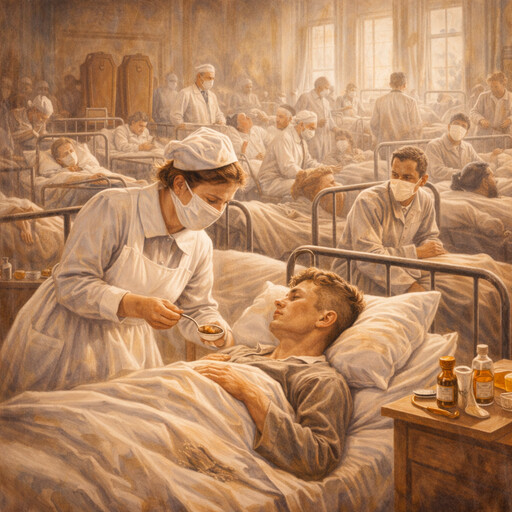
Spanish flu
Global influenza pandemic of 1918
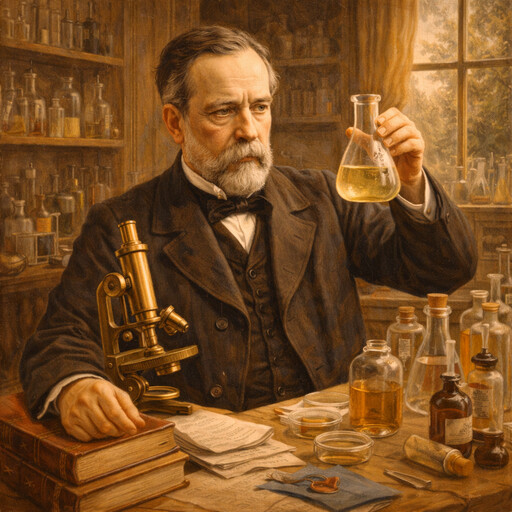
Louis Pasteur
French scientist who studied germs
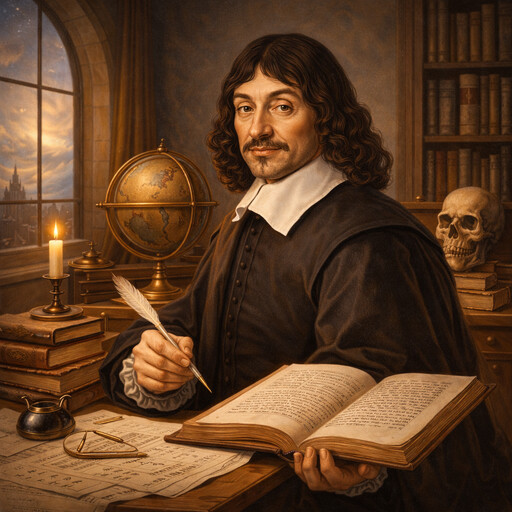
René Descartes
Philosopher and mathematician of early science
Francis Bacon
Thinker who shaped modern scientific method
Blaise Pascal
Mathematician and thinker of early science
Leonardo da Vinci
Italian artist and thinker of the Renaissance

Aristotle
A thinker of ancient Greece

Museum
Places that collect and display objects