Louis Pasteur (1822–1895) was a French scientist who studied tiny living things that cannot be seen with the naked eye. These tiny living things are called microorganisms. He is best known for showing that many diseases are caused by germs, which are harmful microorganisms. His work helped change how people understood illness, cleanliness, and food.
Pasteur was born in 1822 in Dole, France. His father was a tanner, a person who prepares animal skins into leather. Pasteur studied science and chemistry at school and later became a teacher and researcher. At first, he worked on chemistry problems, especially crystals and how they form. Over time, his studies led him toward biology, which is the study of living things.
One of Pasteur’s most important ideas was that germs cause disease. At the time, many people believed that sickness came from bad air. Pasteur showed that microorganisms in the air could spoil food and cause illness. This idea became known as the germ theory of disease. A theory is a well-tested explanation based on evidence. Germ theory later became a basic idea in modern medicine.
Pasteur also developed a method called pasteurization. Pasteurization is a process that heats liquids like milk or juice to kill harmful germs. This process does not make the liquid boil. Pasteurization helps food last longer and become safer to drink. Today, many foods around the world are pasteurized using this method.
Another important part of Pasteur’s work involved vaccines. A vaccine is a substance that helps protect the body from certain diseases. Pasteur created vaccines for diseases such as rabies and anthrax. Rabies is a deadly disease that spreads through animal bites. Pasteur’s rabies vaccine was first used successfully on a young boy in 1885.
Louis Pasteur spent his later years continuing research and supporting science education. He died in 1895 in France. Many research centers, hospitals, and schools are named after him. His work helped form the foundations of microbiology, which is the study of microorganisms.
Louis Pasteur
Level
readlittle.com
French scientist who studied germs
What We Can Learn
- Louis Pasteur was a French scientist in the 1800s.
- He showed that germs can cause disease.
- He created the process called pasteurization.
- He developed vaccines for several diseases.
Related Reads
Dutch Golden Age
Period of Dutch global growth

Antarctic Treaty System
Agreements governing Antarctica
Alexander von Humboldt
Explorer of nature and the natural world
Botany
The study of plants and plant life
Spanish flu
Global influenza pandemic of 1918
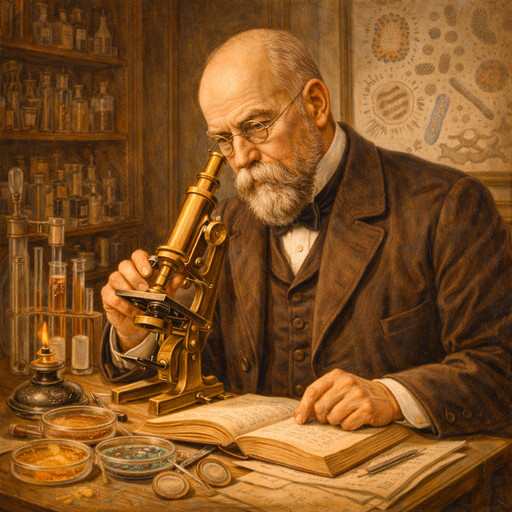
Robert Koch
German doctor who studied disease-causing bacteria
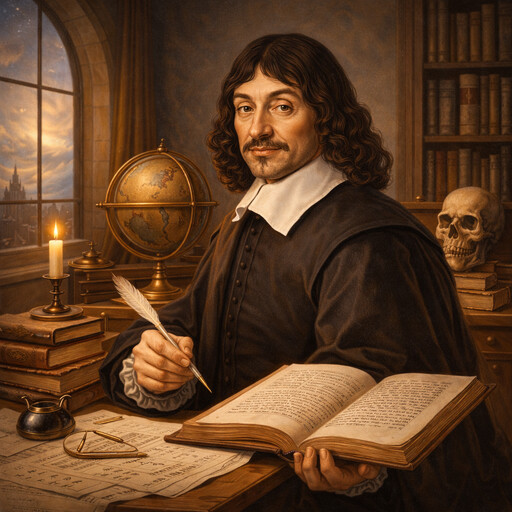
René Descartes
Philosopher and mathematician of early science
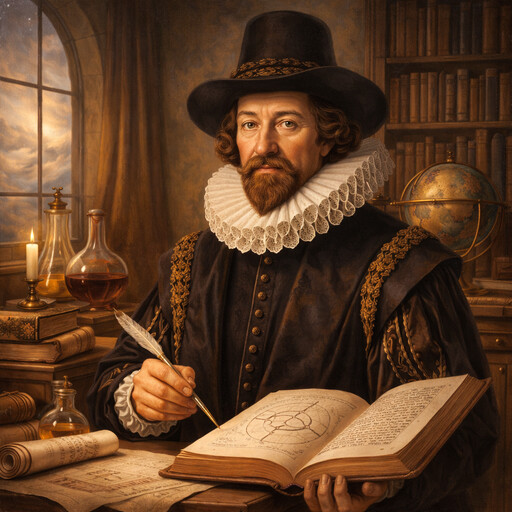
Francis Bacon
Thinker who shaped modern scientific method
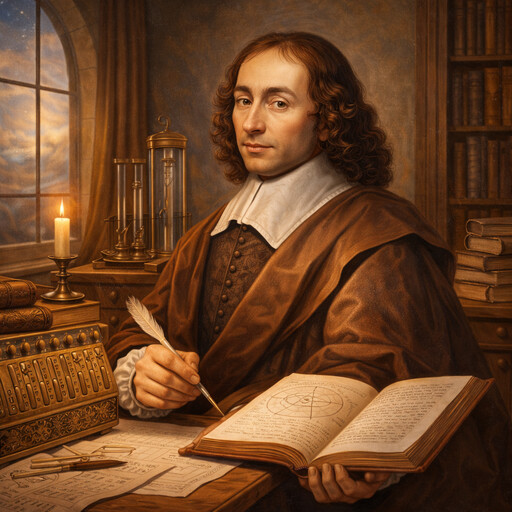
Blaise Pascal
Mathematician and thinker of early science
Leonardo da Vinci
Italian artist and thinker of the Renaissance

Aristotle
A thinker of ancient Greece
Museum
Places that collect and display objects