A sunspot is a dark area that appears on the surface of the Sun. The surface of the Sun is called the photosphere, which is the layer that gives off visible light. Sunspots look dark because they are cooler than the surrounding areas. Even though they are cooler, they are still extremely hot compared to anything on Earth. Studying sunspots helps scientists learn about the Sun’s changing activity.
Sunspots form because of strong magnetic fields. A magnetic field is a force that can push or pull certain objects, such as magnets or some metals, without touching them. On the Sun, magnetic fields can become twisted and rise through the hot gas. This slows the rising of heat in some places. When less heat reaches the surface, that area becomes cooler and darker, forming a sunspot.
Most sunspots come in groups, often with two main spots. These groups sometimes show loops of glowing gas above them. The gas follows magnetic field lines, which are invisible paths that guide how the gas moves. The number of sunspots changes over time. This change follows an 11-year pattern called the sunspot cycle. During the cycle, the Sun has times of high activity, when many sunspots appear, and times of low activity, when few or none appear.
Sunspots are important because they are linked to other forms of solar activity. For example, when magnetic fields near sunspots suddenly change, the Sun can release bursts of energy called solar flares. A flare is a sudden bright flash caused by large amounts of energy leaving the Sun. Another event linked to sunspots is a coronal mass ejection, sometimes called a CME. This is when the Sun sends a large cloud of charged particles into space. Charged particles are tiny pieces of matter that have an electric charge.
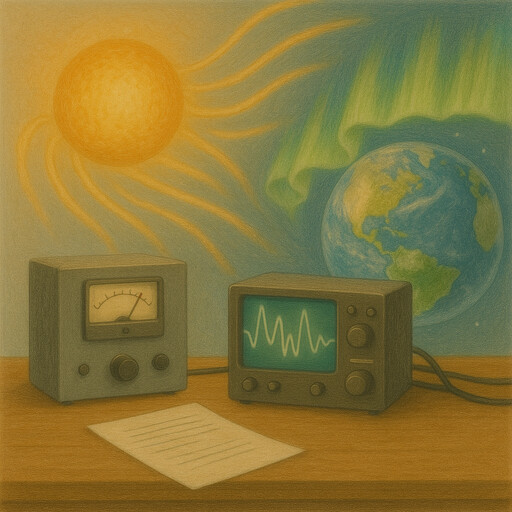
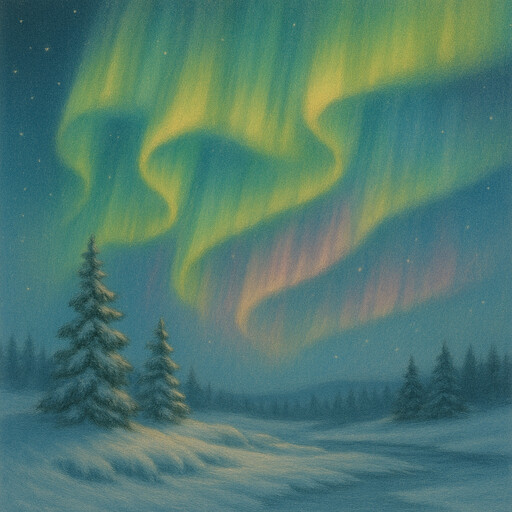
When solar flares or CMEs reach Earth, they can affect the planet’s magnetic field and atmosphere. This can cause bright lights in the sky called auroras, which are colorful glowing patterns often seen near the North and South Poles. Solar activity can also disturb radio signals and satellite communications. Because of these effects, scientists carefully watch sunspots to understand when strong solar events may happen.
People have observed sunspots for hundreds of years. Early astronomers saw them using simple telescopes, though it is never safe to look directly at the Sun. Today, scientists use special instruments on Earth and in space to record sunspots every day. These observations help us learn how the Sun behaves and how its activity can influence life on Earth.
Sunspot
Level
readlittle.com
Cooler dark areas on the Sun
What We Can Learn
- Sunspots are cooler, darker areas on the Sun’s surface.
- They form because of strong magnetic fields.
- Sunspots follow an 11-year cycle of activity.
- Sunspots are linked to solar flares and coronal mass ejections.