Space, also called outer space, is the wide area that exists beyond the earth's atmosphere. It begins about 100 kilometers above the surface of Earth, where the air becomes too thin to support airplanes. In space, there is no air to breathe, no weather, and almost no sound because there are not enough particles to carry it. Space is a near vacuum, meaning it contains very few atoms or molecules compared to Earth.
Although space seems empty, it is filled with many objects and forms of energy. Stars, planets, moons, comets, asteroids, and galaxies all exist in space. The sun is the closest star to Earth and provides light and energy that make life possible. Our planet orbits the Sun along with seven other planets in the solar-system. Beyond our Solar System are billions of other stars, each with their own systems, scattered across the Milky Way galaxy.
Space has no clear end or edge that scientists can observe. The universe, which includes all of space and everything in it, is expanding, meaning that galaxies are moving farther apart over time. This discovery helped support the idea that the universe began with the Big Bang, a massive expansion that happened around 13.8 billion years ago. Scientists study space to learn how stars, planets, and galaxies form and how the universe changes over time.
Because there is no atmosphere in space, temperatures can be extreme. Objects in sunlight can become very hot, while those in shadow can become extremely cold. There is also no air pressure, so humans must wear special space suits when outside of spacecraft. These suits provide oxygen, temperature control, and protection from radiation.
People explore space using telescopes, satellites, and spacecraft. Astronauts have traveled to the moon and worked aboard the International Space Station. Unmanned spacecraft, such as probes and rovers, have visited planets like mars and even traveled beyond our Solar System to gather information. Space exploration helps scientists understand Earth better and develop new technologies.
Space also contains phenomena like black holes, nebulas, and asteroid belts. light, radio waves, and other forms of energy travel through space, allowing astronomers to study faraway stars and galaxies. Although space is vast and mostly empty, it holds everything that exists in the universe, making it essential for understanding where Earth and life fit within it.
Space
Level
readlittle.com
The vast area beyond Earth's atmosphere
What We Can Learn
- Space is the area beyond Earth's atmosphere where planets, stars, and galaxies exist.
- It is mostly empty and has no air, weather, or sound.
- The universe, which includes all of space, is expanding over time.
- Humans explore space using telescopes, spacecraft, and space stations.
Related Reads
Roald Amundsen
Norwegian polar explorer
Perry Expedition
American naval mission to Japan
Mary Kingsley
British traveler and writer in West Africa
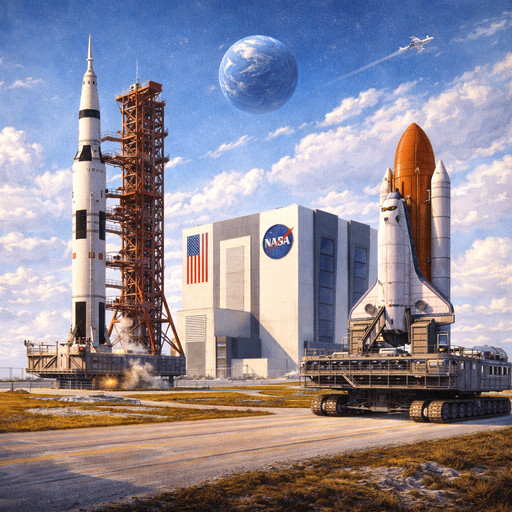
NASA
United States space agency
David Livingstone
Scottish explorer of Africa
Northwest Passage
A sea route through Arctic waters
Francis Xavier
Missionary who traveled across Asia

Lewis and Clark Expedition
Exploring the land west of the Mississippi
John Franklin
British explorer of the Arctic

William Clark
Leader of a famous American exploration

Sacagawea
Guide and interpreter of a western expedition
Ida Laura Pfeiffer
A traveler who journeyed around the world