Triangular trade was a system of long-distance trade that linked three main regions: Europe, Africa, and the Americas. It is called triangular because ships traveled in a triangle-shaped route across the Atlantic Ocean. This trade system developed after European nations began overseas exploration and colonization. It lasted for several centuries and involved many goods, people, and ships.
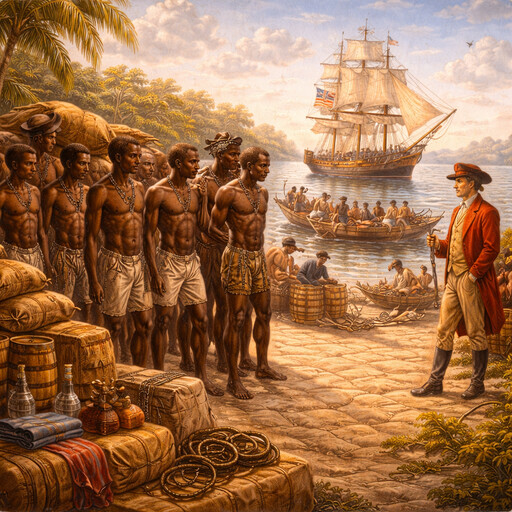
The first part of the triangular trade began in Europe. European merchants loaded ships with manufactured goods. These goods included cloth, metal tools, weapons, glass items, and alcohol. The ships sailed from ports in countries such as England, France, Spain, and Portugal. They crossed the Atlantic Ocean and reached the western coast of Africa.
In Africa, European traders exchanged these manufactured goods for enslaved people. Enslaved people were men, women, and children who were forced into captivity. This exchange happened through local African rulers and traders, not by direct capture by Europeans in most cases. The enslaved people were then forced onto ships. This part of the journey is often called the Middle Passage. The Middle Passage was the sea route from Africa to the Americas.
The Middle Passage was extremely crowded and dangerous. Ships carried many people in small spaces. Travel took several weeks or months. Many enslaved people became sick or died during the voyage. When ships reached the Americas, the enslaved people were sold. They were forced to work on plantations, mines, and farms. Plantations were large farms that grew crops for sale.
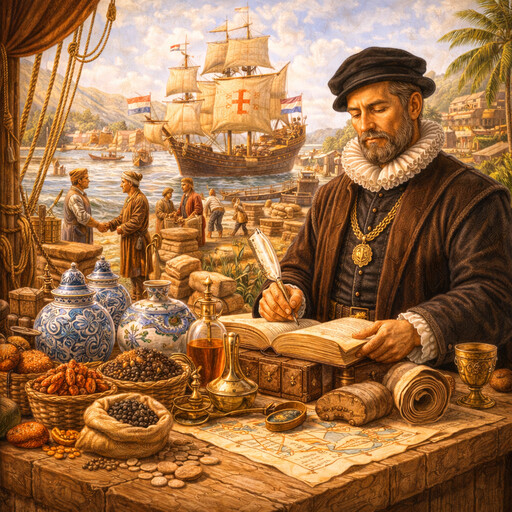
The third part of triangular trade connected the Americas back to Europe. Ships were loaded with raw materials produced by enslaved labor. These materials included sugar, tobacco, cotton, coffee, and rum. Raw materials are natural products that are not yet finished goods. The ships then sailed back across the Atlantic to Europe. There, the materials were sold and used to make new manufactured goods.
Triangular trade did not follow one single route for all ships. Some ships traveled only one or two sides of the triangle. The system also changed over time and worked differently in different regions. However, the general pattern of three connected routes remained the same. Triangular trade ended gradually in the nineteenth century as laws changed and slavery was abolished in many countries.
Triangular trade
Level
readlittle.com
Three-part trade route across the Atlantic
What We Can Learn
- Connected Europe, Africa, and the Americas
- Operated across the Atlantic Ocean
- Included three main trade routes
- Ended mainly in the nineteenth century