Cnut the Great
readlittle.com
Viking king of England, Denmark, and Norway
Cnut the Great was a Viking ruler who became king of England, Denmark, and Norway during the early 11th century. A century is a period of 100 years. Cnut was born around 995 in Denmark and came from a powerful Viking family. After years of conflict between Vikings and Anglo-Saxons, he became king of England in 1016. Later, he also became king of Denmark and Norway. Because he ruled several lands, Cnut’s kingdom is often called the North Sea Empire.
Before becoming king, Cnut fought in battles to claim the English throne. The throne is the right to rule a kingdom. After the death of the English king Æthelred and then his son Edmund Ironside, Cnut reached an agreement that made him king of England. From 1016 onward, he worked to bring peace and stability to the kingdom. He kept some Anglo-Saxon laws and leaders to help people accept his rule. This made it easier for him to govern different groups within the land.
Cnut strengthened his rule by building strong connections with the church. The church was an important part of life in medieval England. Medieval means related to the Middle Ages, a period from about 500 to 1500. Cnut gave gifts to churches and supported religious leaders. This helped him gain respect and support from both the Anglo-Saxon people and church officials. Cnut also traveled to Rome, which was a major religious center, to show his loyalty to the Christian faith.
Cnut ruled fairly and tried to protect trade and travel across his empire. Trade is the buying and selling of goods. Because he ruled lands around the North Sea, he could help keep sea routes safe for ships. This allowed goods such as wood, cloth, and metal to move easily between England, Denmark, and Norway. These connections helped the regions grow stronger together.
One story often told about Cnut describes him sitting by the sea and ordering the waves to stop. The sea did not obey, and Cnut used the moment to show that even a king does not have power over nature. Although the story may not be fully true, it teaches that rulers have limits and cannot control everything.
Cnut died in 1035 and was buried in England. After his death, his sons ruled for a short time, but the North Sea Empire did not stay united. Even so, Cnut is remembered as a strong and effective ruler who brought different lands together. His leadership helped shape early medieval England and its connections with northern Europe.
Before becoming king, Cnut fought in battles to claim the English throne. The throne is the right to rule a kingdom. After the death of the English king Æthelred and then his son Edmund Ironside, Cnut reached an agreement that made him king of England. From 1016 onward, he worked to bring peace and stability to the kingdom. He kept some Anglo-Saxon laws and leaders to help people accept his rule. This made it easier for him to govern different groups within the land.
Cnut strengthened his rule by building strong connections with the church. The church was an important part of life in medieval England. Medieval means related to the Middle Ages, a period from about 500 to 1500. Cnut gave gifts to churches and supported religious leaders. This helped him gain respect and support from both the Anglo-Saxon people and church officials. Cnut also traveled to Rome, which was a major religious center, to show his loyalty to the Christian faith.
Cnut ruled fairly and tried to protect trade and travel across his empire. Trade is the buying and selling of goods. Because he ruled lands around the North Sea, he could help keep sea routes safe for ships. This allowed goods such as wood, cloth, and metal to move easily between England, Denmark, and Norway. These connections helped the regions grow stronger together.
One story often told about Cnut describes him sitting by the sea and ordering the waves to stop. The sea did not obey, and Cnut used the moment to show that even a king does not have power over nature. Although the story may not be fully true, it teaches that rulers have limits and cannot control everything.
Cnut died in 1035 and was buried in England. After his death, his sons ruled for a short time, but the North Sea Empire did not stay united. Even so, Cnut is remembered as a strong and effective ruler who brought different lands together. His leadership helped shape early medieval England and its connections with northern Europe.
What We Can Learn
- Cnut the Great was a Viking ruler who became king of England, Denmark, and Norway.
- He created a North Sea Empire that linked several regions.
- Cnut supported the church and kept peace by using both Viking and Anglo-Saxon traditions.
- His rule helped protect trade and travel across northern Europe.
Related Reads
Edward the Confessor
An early English king and builder
Papua New Guinea
Mountains, reefs, and thousand cultures
River Thames
England’s famous river through London
William the Conqueror
Norman ruler who changed England

Kazakhstan
Steppe republic bridging Europe and Asia
Henry IV
First Lancastrian king of England
William Shakespeare
England’s greatest playwright and poet
Henry I
A Norman king who shaped early England
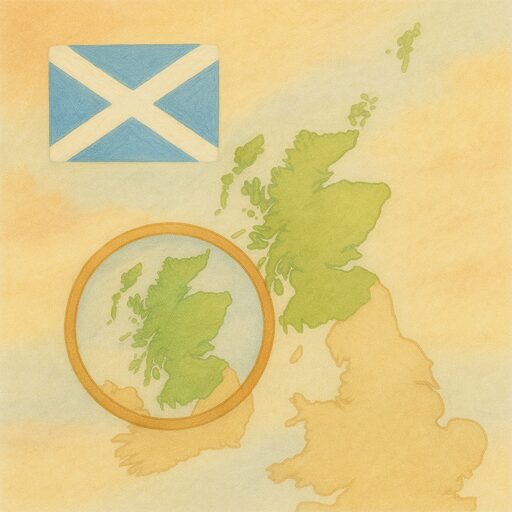
Scotland
Northern nation of hills and history

Halloween
A Night of Costumes, Candy, and Fun Traditions
Andorra
High valleys between France and Spain
Europe
A Continent of Countries, Cultures, and History