Georg Wilhelm Friedrich Hegel was a German philosopher known for writing about ideas, history, and society. He was born in 1770 and died in 1831. Philosophy is the study of ideas about knowledge, reality, and human thought. Hegel lived during a time of major political and social change in Europe. His writings tried to explain how ideas develop over time and how societies change. He believed that history follows patterns that can be studied and understood.
Hegel was born on 27 August 1770 in Stuttgart, a town in what is now Germany. His father worked as a government official. Hegel attended school in Stuttgart and later studied theology and philosophy at the University of Tübingen. Theology is the study of religious belief. At university, he read works by earlier philosophers and studied ancient Greek writers. After finishing his studies, Hegel worked as a private teacher. A private teacher is someone who teaches students in their homes. During these early years, he continued writing and developing his ideas.
In the early 1800s, Hegel began working as a university lecturer. A lecturer is a teacher who gives talks at a university. He taught at the University of Jena and later held positions in other cities. In 1818, he became a professor at the University of Berlin. A professor is a senior university teacher. His lectures covered topics such as logic, history, and politics. Many students attended his classes, and his ideas became widely discussed in German academic life.
One of Hegel’s main ideas was that history develops through a process of change. He believed that ideas often move through conflict and resolution. This process is often explained using three stages: an idea, an opposing idea, and a new idea that combines parts of both. Although Hegel did not always use these exact words, this method is often called a dialectic. A dialectic is a way of understanding change through opposing forces. Hegel applied this idea to history, politics, and human thought.
Hegel wrote several major books. One of his best-known works is The Phenomenology of Spirit, published in 1807. This book discussed how human understanding develops from basic awareness to complex knowledge. Another important work is The Philosophy of Right, which examined laws, government, and society. In this book, Hegel wrote about the state. The state is the organized political structure of a country. He believed that laws and institutions develop over time through historical processes.
Georg Wilhelm Friedrich Hegel died on 14 November 1831 in Berlin, likely during a cholera outbreak. Cholera is a serious disease that spreads through contaminated water. After his death, his ideas continued to be studied and debated. Later thinkers, including Karl Marx, read and responded to Hegel’s work. Hegel is remembered as an important figure in German philosophy because of his detailed writings on history, ideas, and social structures.
Georg Wilhelm Friedrich Hegel
Level
readlittle.com
German philosopher of history and ideas
What We Can Learn
- Georg Wilhelm Friedrich Hegel was a German philosopher.
- He wrote about history, ideas, and social change.
- He taught as a professor at German universities.
- His work influenced later thinkers and debates.
Related Reads

Johann Gottfried Herder
German thinker of culture and language

Fall of the Berlin Wall
End of Germany’s divided barrier
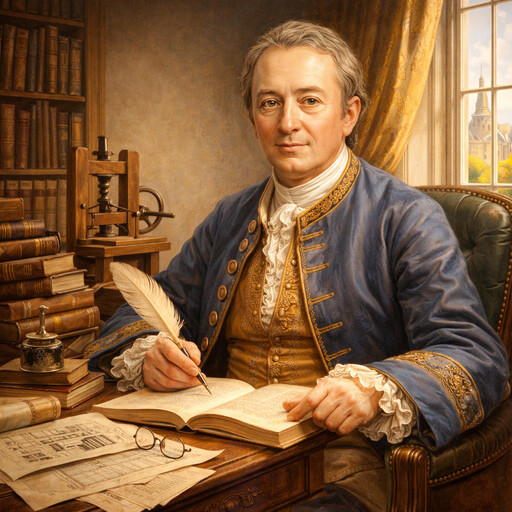
Denis Diderot
Editor of a major Enlightenment work

Friedrich Engels
German philosopher and social thinker
Nazi Germany
Germany under Nazi rule
Weimar Republic
Germany’s republic after World War I
Adolf Hitler
Leader of Nazi Germany
German Empire
Unified German state from 1871
Wilhelm I
First emperor of unified Germany
Paul von Hindenburg
German general and president
Erich Ludendorff
German general in World War I
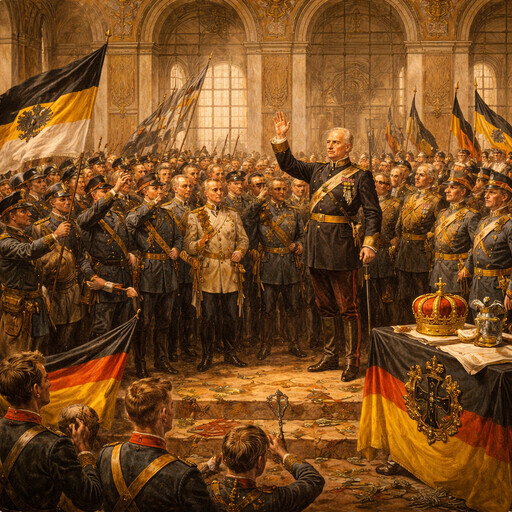
Unification of Germany
Creation of a single German nation