John Franklin was a British explorer and naval officer who lived from 1786 to 1847. He spent much of his life traveling by sea and exploring cold northern lands. Franklin became known for his journeys in the Arctic, a region around the North Pole. These journeys helped European countries learn more about northern coastlines, rivers, and ice-covered seas. His final expedition became one of the most famous exploration stories in history.
John Franklin was born in England in 1786. He joined the British Royal Navy when he was very young. The Royal Navy was the main sea force of Britain. Franklin learned how to sail ships, read maps, and survive long voyages. He served in several wars before turning to exploration. Early in his career, he took part in trips to Australia and other distant places. These experiences prepared him for later journeys into much colder regions.
Franklin became well known for his overland expeditions in northern Canada. An overland expedition is a journey made mostly on land instead of by sea. In the early 1800s, Franklin led groups that traveled by foot, canoe, and sled along rivers that flowed into the Arctic Ocean. These trips were very difficult. The explorers faced freezing weather, hunger, and rough terrain. Terrain means the natural features of the land, such as hills, ice, and rivers. Franklin’s reports helped map parts of northern Canada.
In 1845, Franklin led his most famous journey. He commanded two ships, the HMS Erebus and the HMS Terror. The goal was to find the Northwest Passage. The Northwest Passage is a sea route through the Arctic that connects the Atlantic Ocean to the Pacific Ocean. Finding this route would shorten travel between Europe and Asia. Franklin’s ships sailed into the Arctic but never returned.
For many years, no one knew what happened to Franklin and his crew. Search parties were sent to find them. These searches discovered clues such as abandoned camps and written notes. It became clear that the ships were trapped in ice. The crew suffered from extreme cold, lack of food, and illness. John Franklin died during the expedition in 1847. The rest of the crew also did not survive.
John Franklin’s expeditions added important knowledge about the Arctic region. His journeys helped improve maps and understanding of northern lands. The searches for Franklin also led to further exploration of the Arctic. Today, Franklin is remembered as a key figure in the history of polar exploration. His name is still connected with the search for the Northwest Passage and the dangers of Arctic travel.
John Franklin
Level
readlittle.com
British explorer of the Arctic
What We Can Learn
- John Franklin was a British Arctic explorer.
- He explored northern Canada and Arctic seas.
- He led an expedition to find the Northwest Passage.
- His final expedition was lost in the Arctic.
Related Reads
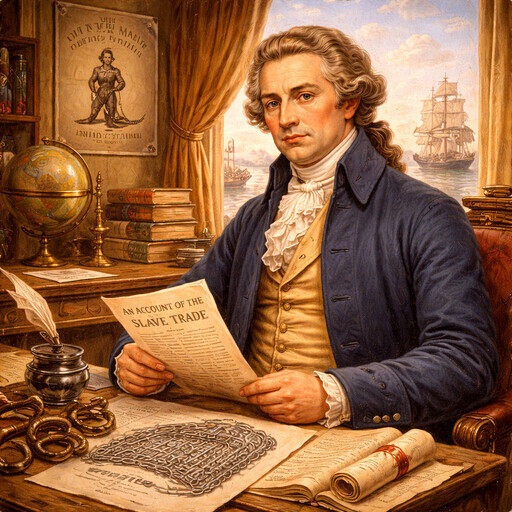
Thomas Clarkson
English campaigner against the slave trade
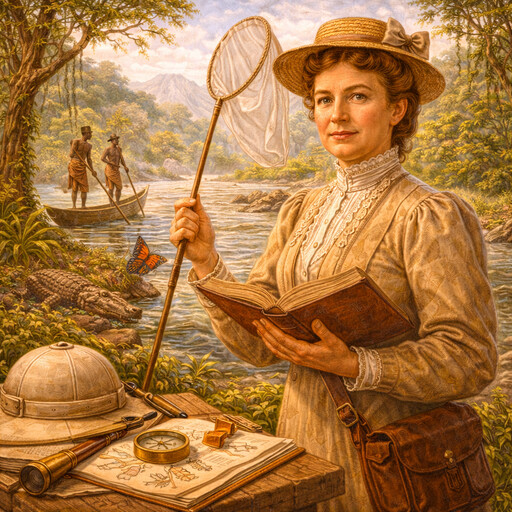
Mary Kingsley
British traveler and writer in West Africa
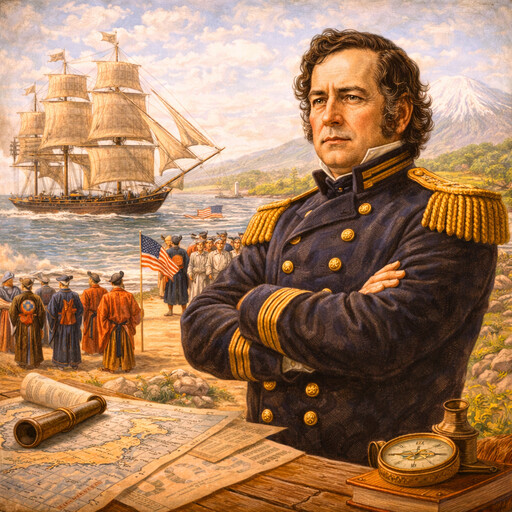
Perry Expedition
American naval mission to Japan
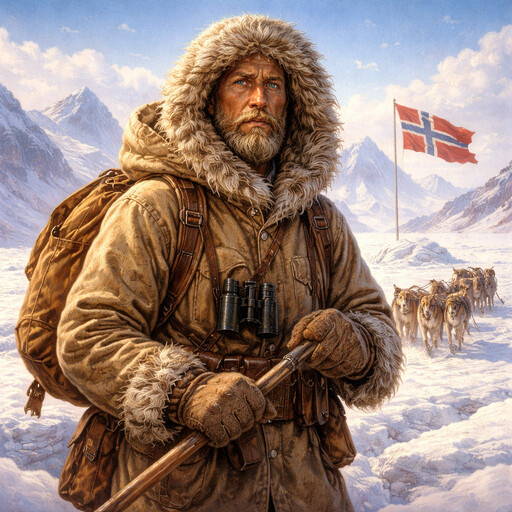
Roald Amundsen
Norwegian polar explorer
David Livingstone
Scottish explorer of Africa

Lewis and Clark Expedition
Exploring the land west of the Mississippi
Sacagawea
Guide and interpreter of a western expedition
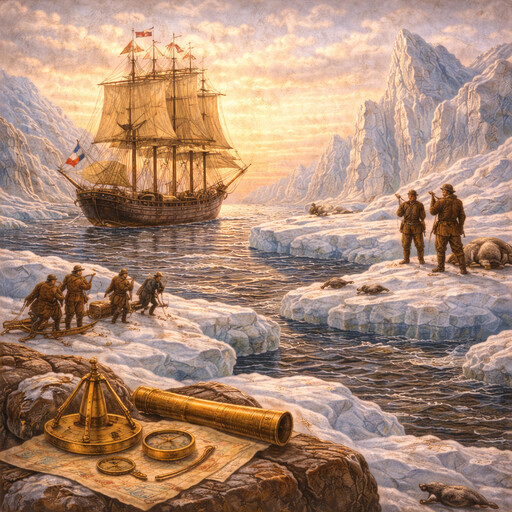
Northwest Passage
A sea route through Arctic waters
Francis Xavier
Missionary who traveled across Asia
James Cook
British explorer of the Pacific Ocean

William Clark
Leader of a famous American exploration
Ida Laura Pfeiffer
A traveler who journeyed around the world