The Northwest Passage is a sea route that runs through the Arctic region of North America. It connects the Atlantic Ocean in the east to the Pacific Ocean in the west. The route passes through a network of seas, straits, and channels among islands north of Canada. A strait is a narrow stretch of water that connects larger bodies of water. The Northwest Passage is located in very cold waters, which are often covered by ice for much of the year.
The idea of the Northwest Passage became important in the late 1400s and 1500s. European countries were looking for faster sea routes to Asia. Asia was known for valuable goods such as spices, silk, and tea. Sailing around Africa or South America took a long time. Explorers believed that a shorter route might exist across the top of North America. This possible route became known as the Northwest Passage.
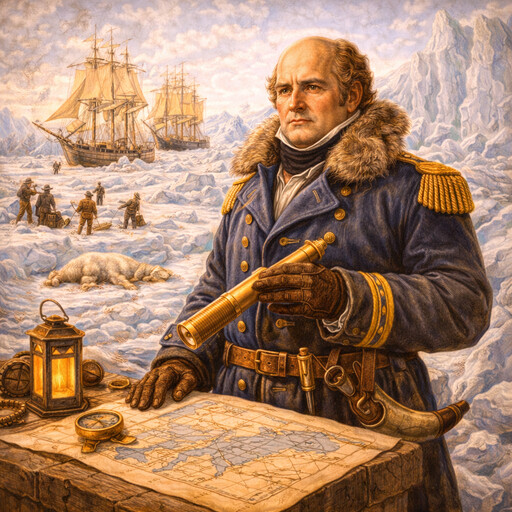
Many explorers tried to find the Northwest Passage. Ships sailed north from Europe and explored coastlines, bays, and icy seas. Some famous explorers connected to this search include Martin Frobisher, Henry Hudson, and John Franklin. These voyages were dangerous. Ships faced thick ice, freezing temperatures, and long winters with little food. Many expeditions failed, and some crews never returned.
The Arctic environment made travel very difficult. Sea ice blocked ships from moving forward. Ice could trap ships in place for months or even years. Winters were dark and cold, with temperatures far below freezing. Explorers also had limited maps and little knowledge of the region. Local Indigenous peoples, such as the Inuit, had lived in the Arctic for thousands of years and understood how to survive there. Their knowledge of ice, weather, and travel routes was very important, although it was not always used by European explorers.
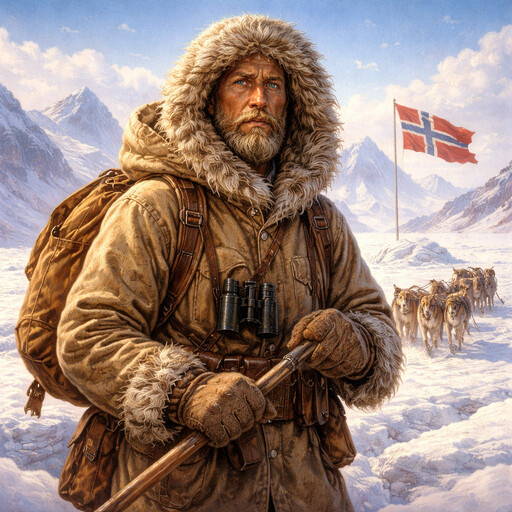
In the early 1900s, the Northwest Passage was finally traveled from start to finish by ship. Norwegian explorer Roald Amundsen completed the journey between 1903 and 1906. He used a small ship and took several years to pass through the ice. This proved that the Northwest Passage was real, but it was not an easy or fast route. Large ships could not safely use it at that time.
Today, the Northwest Passage still exists, but it is rarely used for regular shipping. Ice conditions change from year to year. Some summers have less ice than others. Modern ships and technology have made Arctic travel safer, but the route remains difficult and unpredictable. The Northwest Passage remains an important geographic feature and a key part of exploration history.
Northwest Passage
Level
readlittle.com
A sea route through Arctic waters
What We Can Learn
- The Northwest Passage is a sea route through Arctic Canada.
- Explorers searched for it to reach Asia faster.
- Ice and cold made travel very dangerous.
- The route was first fully traveled in the early 1900s.
Related Reads
Cape of Good Hope
Southern headland of Africa
Mary Kingsley
British traveler and writer in West Africa
Perry Expedition
American naval mission to Japan
David Livingstone
Scottish explorer of Africa
Roald Amundsen
Norwegian polar explorer
Francis Xavier
Missionary who traveled across Asia

Louisiana Purchase
A land deal that doubled the United States
Sacagawea
Guide and interpreter of a western expedition

William Clark
Leader of a famous American exploration
John Franklin
British explorer of the Arctic
Alexander von Humboldt
Explorer of nature and the natural world

Lewis and Clark Expedition
Exploring the land west of the Mississippi