Capitalism is an economic system that organizes how goods and services are produced, sold, and distributed. In a capitalist system, most factories, farms, shops, and businesses are privately owned. Private ownership means that individuals or companies, not the government, own property and make business decisions. People earn income by working for wages or by owning businesses. Goods and services are sold in markets. A market is a place or system where buyers and sellers exchange products and services.
One main feature of capitalism is the use of markets to set prices. Prices are usually determined by supply and demand. Supply is how much of a good is available. Demand is how much people want to buy it. When demand is high and supply is low, prices often rise. When supply is high and demand is low, prices often fall. In capitalism, businesses decide what to produce based on expected demand. Consumers choose what to buy based on price, quality, and need.
Capitalism developed gradually in Europe over several centuries. It became more common during the late Middle Ages and early modern period, when trade expanded between regions. The system grew rapidly during the Industrial Revolution in the 18th and 19th centuries. Factories, machines, and new forms of transport increased production. Many countries in Europe and North America adopted capitalist systems during this time. The ideas of private property and market exchange became central to their economies.
In a capitalist economy, money plays an important role. Money is used to buy goods, pay wages, and invest in businesses. Investment means using money to start or expand a business in order to earn future income. Banks and financial institutions help move money between savers and borrowers. Profit is another key concept. Profit is the money a business earns after costs are paid. Businesses often aim to make a profit so they can continue operating or expand.
Capitalist systems can take different forms. In some countries, the government has a limited role and mainly protects property rights and enforces laws. Property rights are legal rules that protect ownership. In other countries, governments regulate markets more closely. Regulation means setting rules for businesses, such as safety standards or labor laws. Many modern economies are mixed economies. A mixed economy combines elements of capitalism with some government involvement in services like education, health care, or transportation.
Capitalism exists in many parts of the world today. Countries such as the United States, Japan, and Germany use capitalist systems with different rules and levels of regulation. Capitalism has changed over time as technology, trade, and government policies have developed. While details differ between countries, the basic features of private ownership, markets, and profit remain central to capitalist economies.
Capitalism
Level
readlittle.com
Economic system based on private ownership
What We Can Learn
- Capitalism is an economic system based on private ownership.
- Markets are used to buy and sell goods and services.
- Prices are influenced by supply and demand.
- Capitalism developed strongly during the Industrial Revolution.
Related Reads
Dutch Golden Age
Period of Dutch global growth
East India Company
British trading company that ruled India
Dutch East India Company
Powerful trading company of the Netherlands
Nationalism
Idea linking people to a shared nation
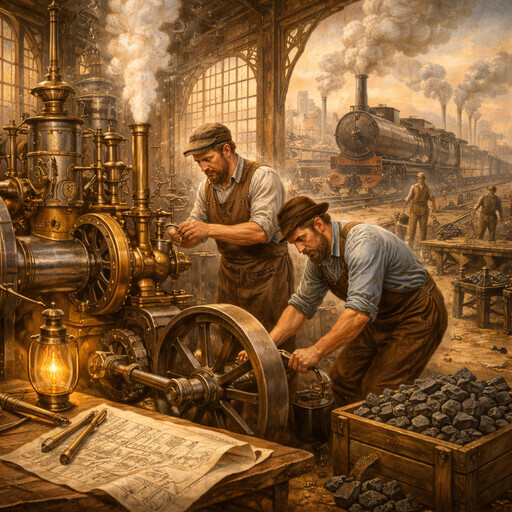
Industrial Revolution
Shift from hand tools to machines
David Ricardo
British thinker on trade and economy
Adam Smith
Scottish thinker of trade and economy
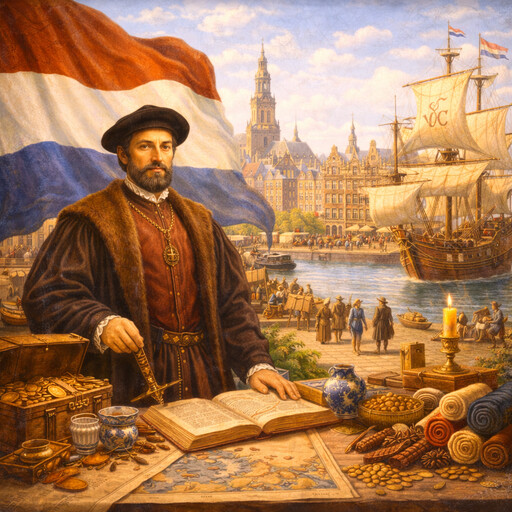
Dutch Republic
Independent republic in northern Europe

Mediterranean Sea
Sea between Europe, Africa, and Asia
Mali Empire
A great empire of West Africa

Venice
City built on water
Harald Bluetooth
Viking-age king who united Denmark