The Dutch Republic was a country in northern Europe that existed from 1588 to 1795. It was formed after the northern provinces of the Netherlands broke away from Spanish rule. At that time, the region was ruled by Spain, which was part of a large empire. The Dutch provinces fought for independence during a long conflict called the Eighty Years’ War. A war is a period of armed fighting between groups or states.
The Dutch Republic was officially called the Republic of the Seven United Netherlands. It was made up of seven provinces, including Holland, Zeeland, and Utrecht. Each province had its own government. They worked together in a central meeting called the States General. This made the republic different from kingdoms ruled by a single king. Power was shared among local leaders.
Religion played an important role in the Dutch Republic. Many people followed Calvinism, a form of Protestant Christianity. Protestants were Christians who separated from the Roman Catholic Church. While Calvinism was the main public religion, people of other beliefs were often allowed to live and work in the republic. This helped attract skilled workers, traders, and thinkers from other countries.
The Dutch Republic became very strong in trade and shipping. Its merchants traded goods such as spices, cloth, and grain across Europe and beyond. Dutch ships traveled to Asia, Africa, and the Americas. Trading companies like the Dutch East India Company helped manage long-distance trade. This period of success is often called the Dutch Golden Age, meaning a time of great growth in wealth, art, and science.
Cities such as Amsterdam grew into major centers of trade and finance. Banks and stock exchanges developed to support business. Artists such as Rembrandt lived and worked during this time. Scientific study also expanded, with new ideas about nature and the world. These changes were linked to the republic’s strong economy and active cities.
The Dutch Republic began to lose power in the late 1600s and 1700s. Other European states grew stronger, and wars weakened the republic. In 1795, French forces invaded, and the Dutch Republic ended. It was later replaced by new forms of government, leading eventually to the modern country of the Netherlands.
Dutch Republic
Level
readlittle.com
Independent republic in northern Europe
What We Can Learn
- The Dutch Republic existed from 1588 to 1795.
- It was made up of seven self-governing provinces.
- Trade and shipping were central to its power.
- It ended after French invasion in the late 1700s.
Related Reads
No image
Vienna
Capital city on the Danube River

Vilnius
Historic capital city of Lithuania

Revolutions of 1848
Uprisings across Europe in 1848

Munich Agreement
1938 agreement over Czechoslovak territory

Polish–Soviet War
War over borders after World War I

Molotov–Ribbentrop Pact
Non-aggression agreement before World War II
Maria Theresa
Powerful ruler of the Habsburg lands
Polish–Lithuanian Commonwealth
A large early modern European state

Fall of the Berlin Wall
End of Germany’s divided barrier
Prague
Historic capital city of the Czech Republic
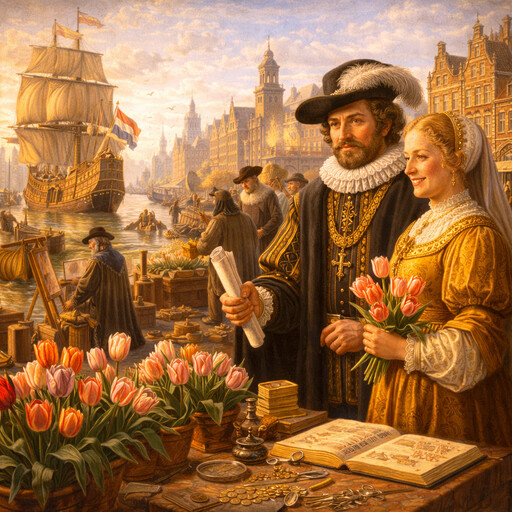
Dutch Golden Age
Period of Dutch global growth
Peace of Westphalia
Treaties ending major European wars