Ecology is a branch of science that studies how living things interact with their environment. An environment is everything around a living thing, including air, water, soil, plants, animals, and climate. Ecology looks at how organisms survive, grow, and reproduce in these surroundings. It also studies how living things depend on one another in nature.
Living things are called organisms. Organisms include plants, animals, fungi, and very small life forms such as bacteria. In ecology, scientists study how organisms get food, water, and shelter. For example, plants use sunlight to make food, while animals may eat plants or other animals. These feeding links form food chains, which show how energy moves from one organism to another.
Ecology also studies habitats and ecosystems. A habitat is the natural place where an organism lives, such as a forest, river, or desert. An ecosystem includes all the living things in an area and the non-living parts, such as rocks, air, and water. A pond ecosystem, for example, includes fish, plants, insects, water, sunlight, and mud. All these parts affect one another.
Another important idea in ecology is population. A population is a group of the same type of organism living in one area. For example, all the deer living in one forest form a population. Ecology studies how populations grow or shrink over time. Changes can happen because of food supply, weather, disease, or predators. A predator is an animal that hunts other animals for food.
Ecology also looks at how ecosystems change. Natural events such as floods, fires, and storms can change habitats. Human activities can also affect ecosystems. Farming, building cities, and cutting down forests can change how land is used. These actions can affect plants and animals by changing their habitats and food sources.
The word ecology comes from Greek words meaning "study of the home." It was first used in the 1800s by a German scientist named Ernst Haeckel. Ecology is now studied all over the world. Scientists use observation, measurement, and experiments to understand how nature works. This information helps describe patterns in the natural world and how living things are connected.
Ecology
Level
readlittle.com
Study of living things and environments
What We Can Learn
- Ecology studies how living things interact with their environment.
- It looks at organisms, habitats, and ecosystems.
- Food chains show how energy moves in nature.
- Ecosystems include living and non-living parts.
Related Reads
Eye
Organ used for seeing light
Sense
Ways humans receive information
Paul Ehrlich
Pioneer of modern medical science
Natural selection
How living things change over time
Botany
The study of plants and plant life
Dormancy
A temporary state of inactivity
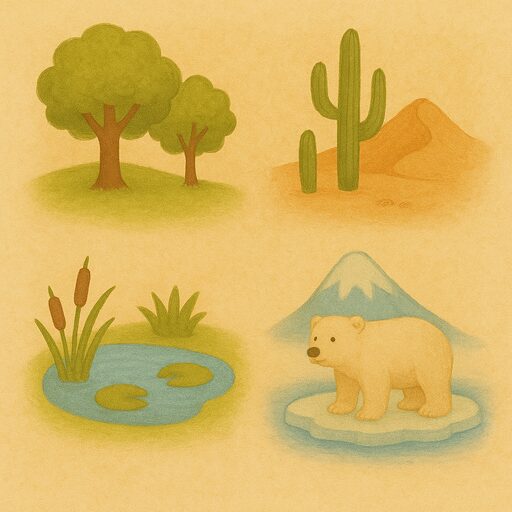
Habitat
Natural home of living things
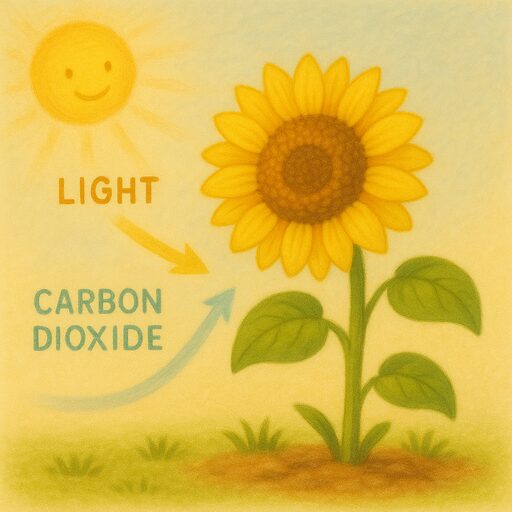
Photosynthesis
How plants make food using light
Cactus
Plant adapted to dry environments
Nutrient
Substance needed for growth and life
Gregor Mendel
Monk who studied inheritance in plants
Rachel Carson
Scientist and writer on nature