Natural selection is a natural process that explains how plants, animals, and other living things slowly change over long periods of time. It is one of the main ideas of evolution. Evolution means gradual change in living things over many generations. Natural selection happens because individuals in a species are not exactly the same. Some differences help an organism survive and reproduce, while others do not.
The idea of natural selection was clearly explained in the 1800s by Charles Darwin, an English naturalist. A naturalist is a person who studies nature and living things. Darwin observed many kinds of plants and animals while traveling on a ship called the HMS Beagle. He noticed that living things in similar places often shared features, but they were also slightly different. These small differences mattered for survival.
All living things produce more offspring than can survive. Offspring means the young of plants or animals. Food, space, and safety are limited in nature. Because of this, individuals must compete to survive. Competition means trying to get the same limited resources. Some individuals have traits that help them survive better. A trait is a feature, such as body color, size, or shape. These individuals are more likely to live long enough to reproduce.
When individuals with helpful traits reproduce, they often pass those traits to their offspring. Over many generations, these helpful traits become more common in the population. A population is a group of the same species living in one area. Traits that do not help survival or reproduction become less common. This slow change in trait frequency is natural selection. The environment plays a key role. The environment includes climate, food sources, predators, and other living things.
A simple example involves animals with different colors. If a population of insects lives on dark tree bark, darker insects may be harder for birds to see. Birds are predators, meaning they hunt other animals. Dark insects are more likely to survive and reproduce than light-colored insects. Over time, most insects in that area may become darker. If the environment changes, different traits may become helpful.
Natural selection does not work toward a goal. It does not plan or think. It only describes what happens when traits affect survival and reproduction. Over very long periods of time, natural selection can lead to the formation of new species. A species is a group of living things that can reproduce with each other. Natural selection is one of the key processes that explains the diversity of life on Earth.
Natural selection
Level
readlittle.com
How living things change over time
What We Can Learn
- Natural selection explains how traits change over generations
- Individuals in a species have different traits
- Traits that help survival become more common
- The environment affects which traits are helpful
Related Reads
Eye
Organ used for seeing light
Paul Ehrlich
Pioneer of modern medical science
Sense
Ways humans receive information
Botany
The study of plants and plant life
Dormancy
A temporary state of inactivity
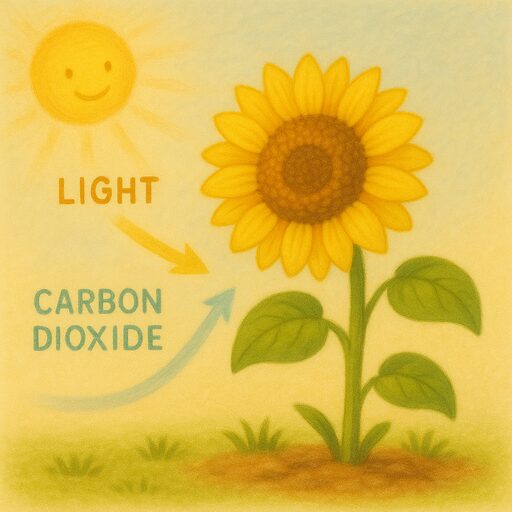
Photosynthesis
How plants make food using light
Nutrient
Substance needed for growth and life
Gregor Mendel
Monk who studied inheritance in plants
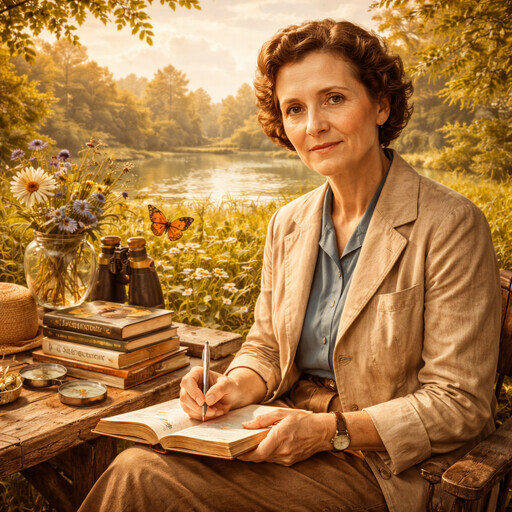
Rachel Carson
Scientist and writer on nature
Ecology
Study of living things and environments
Plant
Living organism that makes its own food
Animal
Living organisms that eat other life