The Galilean moons are the four largest natural satellites that orbit the planet Jupiter. A satellite is an object that travels around a larger body in space. These moons are named Io, Europa, Ganymede, and Callisto. They are called Galilean moons because they were first seen in 1610 by Galileo Galilei, an early scientist who used one of the first telescopes.
Each of the four moons has its own shape, surface, and main features. Io is the closest moon to Jupiter. It has many active volcanoes, which are openings in the surface that release melted rock, gas, and ash. Europa is covered by a smooth layer of ice. Many scientists think a deep ocean of liquid water may lie under this ice. Ganymede is the largest moon in the Solar System. A Solar System is the group of planets and their moons that orbit a star. Callisto, the farthest of the four, has many impact craters. An impact crater is a round hole made when a space rock hits a surface.
The Galilean moons move around Jupiter in regular paths. These paths are called orbits. Io, Europa, and Ganymede also have a special pattern called an orbital resonance. This means their orbits are linked in a repeating ratio. For example, when Ganymede goes around Jupiter once, Europa goes around twice, and Io goes around four times. This pattern affects the pull of gravity between the moons. Gravity is the force that attracts objects toward each other.
These moons are very large compared to most moons in the Solar System. Ganymede is even bigger than the planet Mercury, although it has much less mass. Europa is smaller but has a bright surface made mostly of ice. Io has yellow, red, and black colors caused by its volcanic materials. Callisto is darker and covered with many craters that have remained for billions of years.
The Galilean moons were important for early astronomy because their movements around Jupiter showed that not everything in the sky revolved around Earth. Astronomy is the study of objects in space. Their discovery helped scientists understand that planets can have their own systems of moons. Today, spacecraft have taken close-up pictures of these moons, showing mountains, ice cracks, volcanoes, and areas of rock.
Modern missions to Jupiter continue to observe the Galilean moons to learn more about their surfaces, their inner layers, and the materials that make them up. Each moon provides examples of different conditions found in the outer Solar System, such as volcanic activity, thick ice, large craters, and strong gravitational forces.
Galilean moons
Level
readlittle.com
Four large moons of Jupiter
What We Can Learn
- The Galilean moons are Io, Europa, Ganymede, and Callisto.
- They were discovered in 1610 by Galileo Galilei.
- Each moon has different features, such as volcanoes, ice, or craters.
- Their orbits show patterns that help explain gravity and motion around Jupiter.
Related Reads
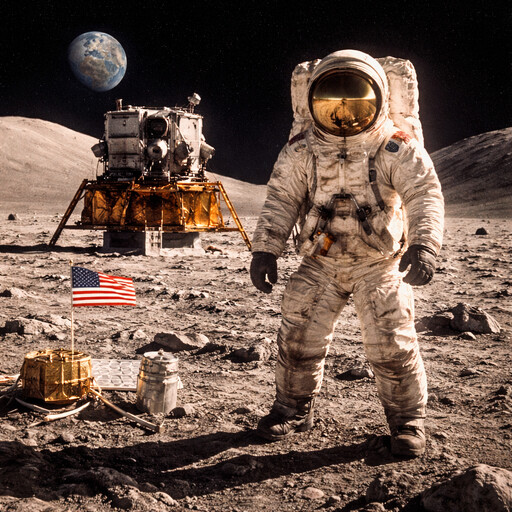
Apollo 11
First human landing on the Moon
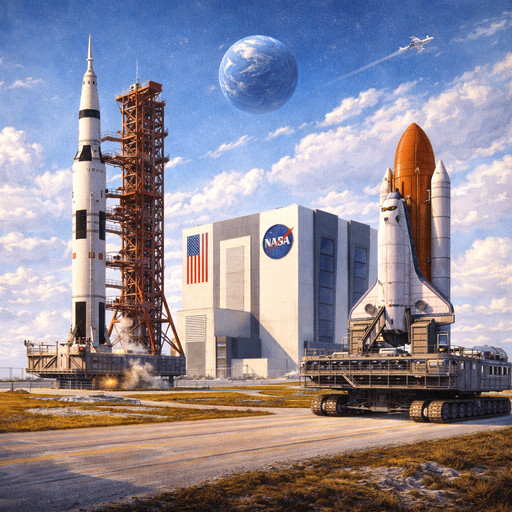
NASA
United States space agency
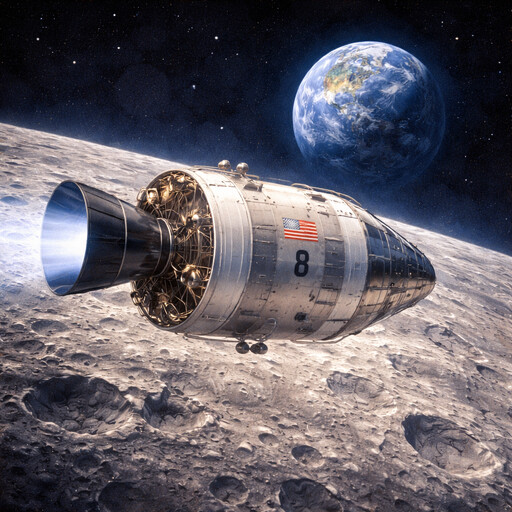
Apollo 8
First human mission to orbit the Moon

Neil Armstrong
First human to walk on the Moon
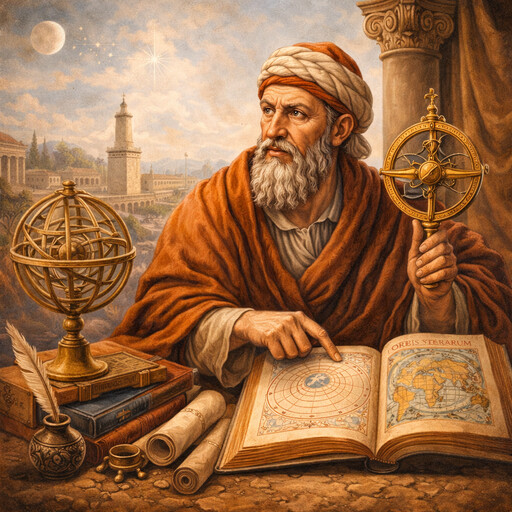
Ptolemy
Ancient scholar of astronomy and geography

Nicolaus Copernicus
Astronomer who placed the Sun at center
Johannes Kepler
Astronomer who described planet motion
Hubble Space Telescope
Space telescope orbiting Earth
Supernova
Powerful explosion of a dying star
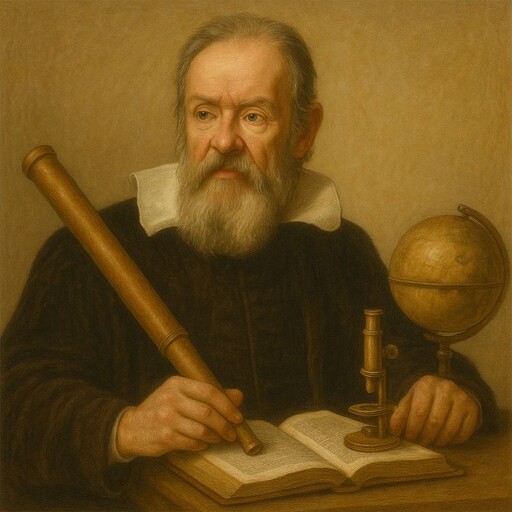
Galileo Galilei
Early observer of the skies
Nebula
Clouds of gas and dust in space
Exoplanet
Planets beyond our solar system