The Peace of Augsburg was an agreement made in the year 1555 in the city of Augsburg, in present-day Germany. It was created to bring an end to long religious conflicts within the Holy Roman Empire. At that time, many parts of Europe were divided by disagreements between Catholics and Protestants. Protestantism was a form of Christianity that began during the Reformation. The Peace of Augsburg tried to create order by setting rules about religion within the empire. It did not solve all problems, but it established a clear system that shaped political and religious life for many years.
The background to the Peace of Augsburg lies in the Protestant Reformation. In 1517, Martin Luther challenged practices of the Roman Catholic Church. His ideas spread quickly across German lands. Many princes, who were rulers of territories within the Holy Roman Empire, supported Lutheran beliefs. Lutheranism is a branch of Protestant Christianity based on Luther’s teachings. Other rulers remained Catholic. These divisions led to unrest and armed conflict. Several wars broke out between Catholic and Protestant forces. By the middle of the 1500s, it became clear that the empire needed a formal agreement to manage these differences.
The Holy Roman Emperor at the time was Charles V. An emperor is a ruler over many lands and peoples. Charles V wanted to keep the empire united under Catholicism, but he faced strong resistance. After years of fighting, his brother Ferdinand I took part in negotiations. These talks led to the Peace of Augsburg. The agreement was signed by representatives of the emperor and the imperial estates. Imperial estates were the political units of the empire, such as principalities, bishoprics, and free cities.
The main rule of the Peace of Augsburg was summarized by the Latin phrase cuius regio, eius religio. This phrase means “whose region, his religion.” Under this rule, each ruler could decide whether his territory would be Catholic or Lutheran. The people living there were expected to follow the ruler’s choice. If they did not agree, they were allowed to move to another territory where their religion was accepted. This rule applied only to Catholicism and Lutheranism. Other Protestant groups, such as Calvinists, were not included in the agreement.
The Peace of Augsburg also addressed church lands. Some territories were ruled by bishops, who were church leaders. These lands were called ecclesiastical territories. The agreement stated that if a bishop changed religion, he had to give up his position and lands. This rule was known as the ecclesiastical reservation. It was meant to protect Catholic control of church lands. However, this rule caused confusion and disagreement, because it was not always clearly followed.
The Peace of Augsburg reduced violence for a time, but it did not bring lasting peace. Religious divisions continued, especially because the agreement excluded other Protestant groups. Over time, tensions grew again within the Holy Roman Empire. These tensions later contributed to the Thirty Years’ War, which began in 1618. The Peace of Augsburg remains an important historical agreement because it showed an early attempt to manage religious differences through law rather than constant war.
Peace of Augsburg
Level
readlittle.com
Religious settlement in the Holy Roman Empire
What We Can Learn
- Signed in 1555 to address religious conflict
- Allowed rulers to choose Catholicism or Lutheranism
- Applied only within the Holy Roman Empire
- Did not include all Christian groups
Related Reads

Munich Agreement
1938 agreement over Czechoslovak territory

Molotov–Ribbentrop Pact
Non-aggression agreement before World War II
Treaty of Portsmouth
Peace agreement ending Russo-Japanese War
Treaty of Nanking
First unequal treaty between China and Britain
Peace of Westphalia
Treaties ending major European wars
Treaty of Tordesillas
Dividing new lands between two kingdoms
Irish Civil War
Conflict over Ireland’s new state
Treaty of Versailles
Peace agreement ending World War I
Peace of Utrecht
European treaties ending a major war
Henry IV of France
First Bourbon king of France
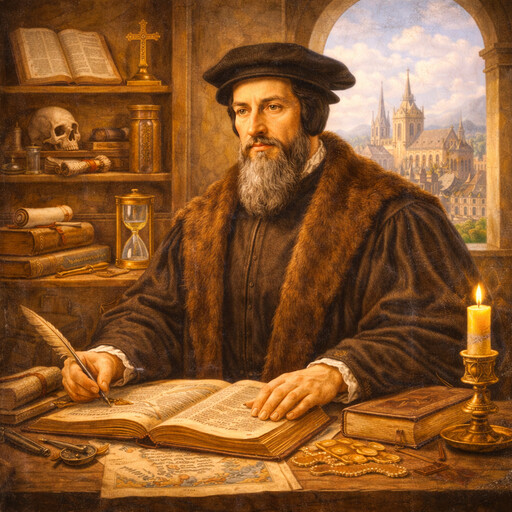
John Calvin
Reformer in sixteenth-century Europe
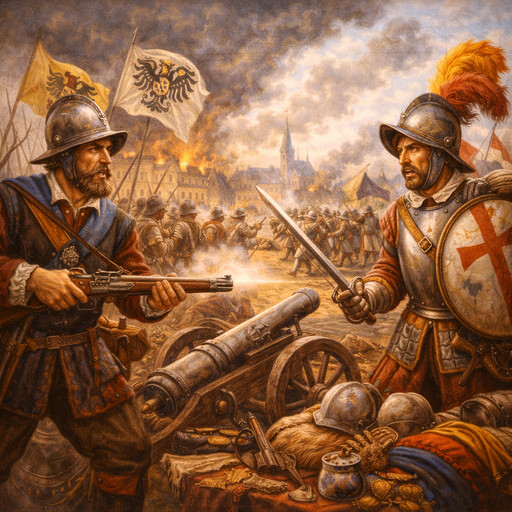
Thirty Years' War
Major European war of the seventeenth century