Charles V was one of the most powerful rulers in European history. He was born in 1500 and ruled many lands across Europe and beyond. He became Holy Roman Emperor in 1519. At the same time, he ruled Spain as Charles I of Spain. His lands included Spain, parts of Italy, the Netherlands, Austria, and overseas territories in the Americas.
Charles V came from the Habsburg family. This was a royal family that ruled many parts of Europe. He inherited his lands from different relatives. Because of this, his empire was very large but also hard to govern. Travel and communication were slow, and different regions had their own laws and customs.
A major issue during Charles V’s reign was religion. The Protestant Reformation had begun in Germany. This movement challenged the authority of the Catholic Church. Charles V was Catholic and tried to keep religious unity. He fought against Protestant rulers in the Holy Roman Empire. These conflicts caused long wars within his lands.
Charles V also faced many wars with other European rulers. One of his main rivals was Francis I of France. They fought over control of land in Italy and along their borders. Charles also fought against the Ottoman Empire, which was expanding into Europe from the east under Suleiman the Magnificent.
In addition to European conflicts, Charles V ruled overseas territories in the Americas. These lands were taken by Spanish explorers and soldiers. Gold and silver from the Americas became important to Spain. However, managing these distant lands was difficult and required strong officials and armies.
Later in his life, Charles V became tired of constant war and travel. In 1556, he gave up most of his titles. He divided his empire. His brother Ferdinand I became Holy Roman Emperor. His son Philip II of Spain received Spain and its overseas lands. Charles V then retired to a monastery, where he died in 1558.
Charles V
Level
readlittle.com
Ruler of a vast European empire
What We Can Learn
- Charles V ruled a very large empire in Europe.
- He was both Holy Roman Emperor and king of Spain.
- His reign included religious and political conflicts.
- He divided his empire before his death.
Related Reads
No image
Vienna
Capital city on the Danube River

Munich Agreement
1938 agreement over Czechoslovak territory

Peter the Great
Russian ruler who reshaped his country

Ivan III
Founder of a unified Russian state

Revolutions of 1848
Uprisings across Europe in 1848

Polish–Soviet War
War over borders after World War I

Vilnius
Historic capital city of Lithuania
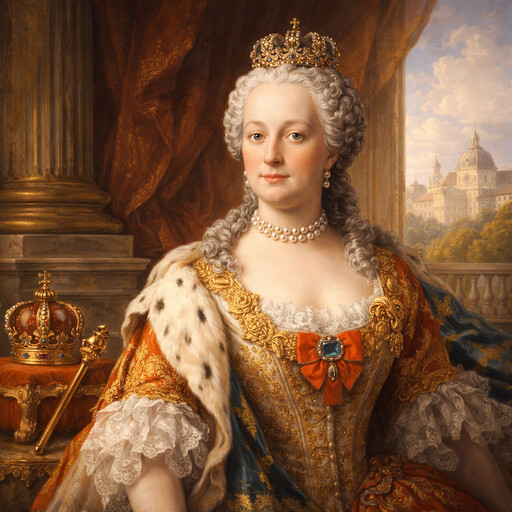
Maria Theresa
Powerful ruler of the Habsburg lands

Molotov–Ribbentrop Pact
Non-aggression agreement before World War II
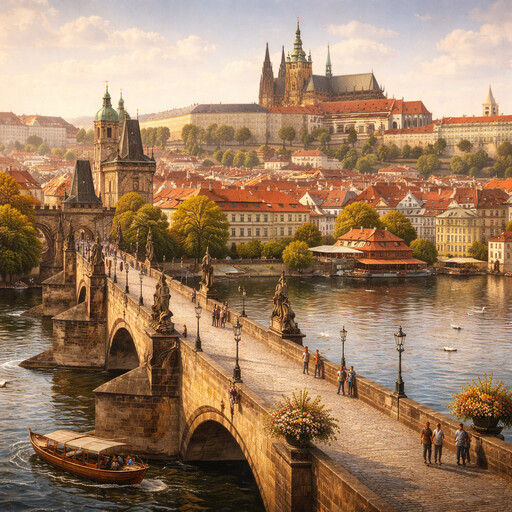
Prague
Historic capital city of the Czech Republic
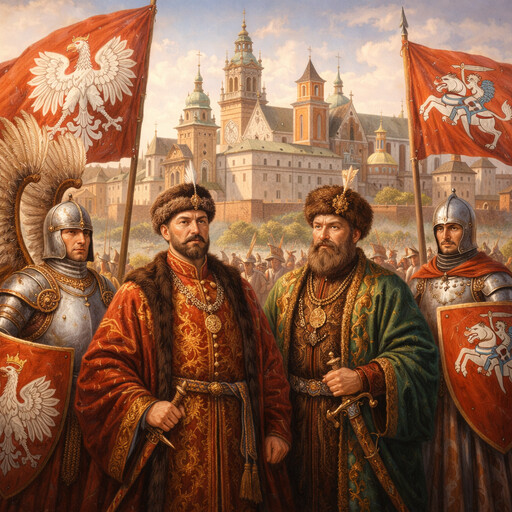
Polish–Lithuanian Commonwealth
A large early modern European state
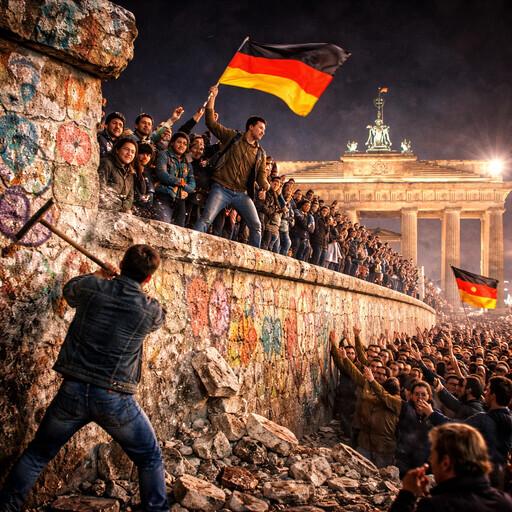
Fall of the Berlin Wall
End of Germany’s divided barrier