Johannes Gutenberg was a German inventor who lived in the 1400s. He is best known for developing a new method of printing using movable type in Europe. Movable type means small, separate pieces with letters on them that can be arranged and reused to print pages. Before this method, books were copied by hand or printed using carved wooden blocks. These older methods were slow and required much labor. Gutenberg’s printing system allowed text to be printed more efficiently. His work changed how written information was produced and shared across Europe.
Johannes Gutenberg was born around the year 1400 in the city of Mainz, which is in present-day Germany. His family was involved in metalworking and trade. Metalworking is the shaping and forming of metal into useful objects. This background helped Gutenberg later when he worked with metal type. Little is known about his early life, but he likely received basic education and learned practical skills. As a young adult, he spent time in other cities, including Strasbourg. During this period, he worked on different projects and experiments. These activities helped him develop ideas related to printing.
Gutenberg’s main invention combined several existing technologies into one system. He developed metal letters that could be made in large numbers using molds. A mold is a shaped container used to form objects. Each letter was cast from metal and could be reused many times. Gutenberg also improved oil-based ink, which stuck well to metal type and paper. Paper had become more available in Europe by this time. He also adapted a press, similar to those used to press grapes for wine, to apply even pressure to printed pages. Together, these parts formed a complete printing system.
One of Gutenberg’s most famous printed works is the Gutenberg Bible. This Bible was printed in the 1450s and used Latin text. Latin was the language commonly used for religious books in Europe at the time. The Bible was printed in large volumes with clear and regular letters. Each copy looked similar, which was difficult to achieve with handwritten books. Although the Bible was expensive, it showed that books could be produced in greater numbers than before. This demonstrated the practical use of Gutenberg’s printing method.
Gutenberg faced many financial problems during his life. Printing required money for materials, tools, and workers. He borrowed money from investors, including a man named Johann Fust. Later, Fust sued Gutenberg over unpaid debts. As a result, Gutenberg lost control of some of his printing equipment. Other printers continued the work using similar methods. Printing workshops spread to many cities across Europe. Books on religion, law, science, and literature were printed and distributed more widely. This spread of printing occurred within a few decades.
Johannes Gutenberg died in 1468 in Mainz. He did not become wealthy or widely famous during his lifetime. However, his printing method continued to be used and improved by others. Over time, movable-type printing became common in Europe. It changed how information was recorded and preserved. Written materials became more consistent in form and easier to copy. Gutenberg is remembered today for his role in developing printing technology that shaped written communication for centuries.
Johannes Gutenberg
Level
readlittle.com
Inventor of movable-type printing in Europe
What We Can Learn
- Johannes Gutenberg developed movable-type printing in Europe
- He combined metal type, ink, paper, and a press
- The Gutenberg Bible showed the new method in use
- Printing spread to many European cities after his work
Related Reads
No image
Vienna
Capital city on the Danube River
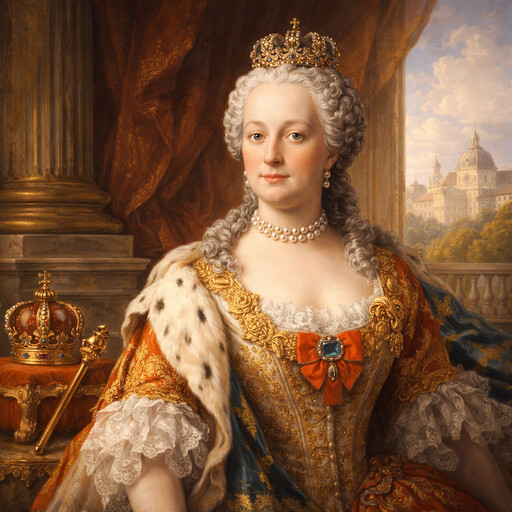
Maria Theresa
Powerful ruler of the Habsburg lands

Vilnius
Historic capital city of Lithuania

Munich Agreement
1938 agreement over Czechoslovak territory

Polish–Soviet War
War over borders after World War I

Molotov–Ribbentrop Pact
Non-aggression agreement before World War II

Revolutions of 1848
Uprisings across Europe in 1848

Fall of the Berlin Wall
End of Germany’s divided barrier

Prague
Historic capital city of the Czech Republic
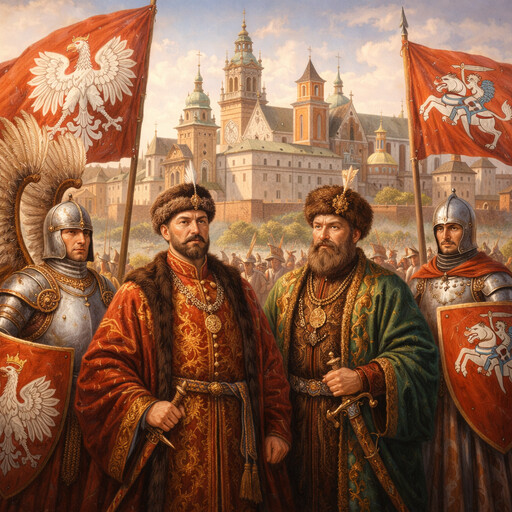
Polish–Lithuanian Commonwealth
A large early modern European state
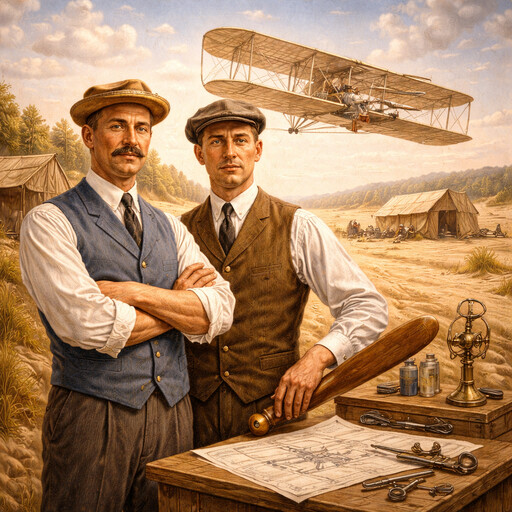
Wright brothers
Pioneers of powered human flight
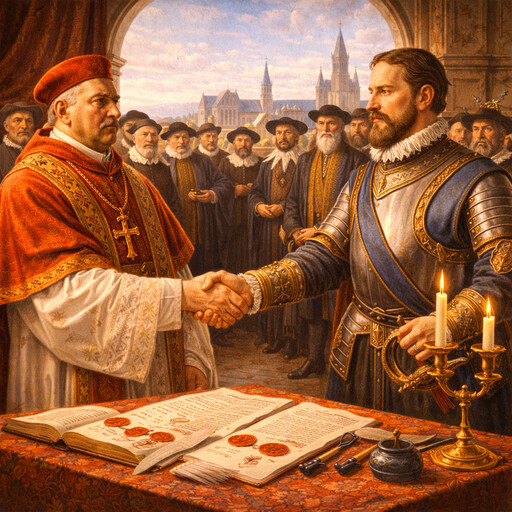
Peace of Westphalia
Treaties ending major European wars