Franklin D. Roosevelt grew up in Hyde Park, New York, inspired by his cousin Theodore's mix of adventure and public service. After Harvard and Columbia Law School he entered politics as a New York state senator and assistant secretary of the Navy. In 1921 he contracted polio, losing the use of his legs, but he learned to stand with braces and projected optimism that comforted others facing hardship.
Elected governor of New York in 1928, Roosevelt experimented with relief programs for unemployed workers. When the Great Depression deepened, he won the 1932 presidential election promising a "New Deal" for the American people. His first hundred days created bank holidays, the Civilian Conservation Corps, and rules to stabilize finance. Fireside chats over the radio explained these steps in plain language, rebuilding trust in government.
Throughout the 1930s Roosevelt expanded federal responsibility through Social Security, unemployment insurance, the Works Progress Administration, and rural electrification. These programs aimed to provide relief, spur recovery, and reform capitalism so that future crashes would be less severe. Critics argued the New Deal went too far or not far enough, but Roosevelt insisted that bold experimentation was better than inaction.
When World War II erupted, Roosevelt supported allies through Lend-Lease and strengthened the armed forces. After Japan attacked Pearl Harbor in December 1941, he declared that the nation must defend the Four Freedoms: freedom of speech, freedom of worship, freedom from want, and freedom from fear. He coordinated Allied strategy with Winston Churchill and Joseph Stalin, oversaw the D-Day invasion plans, and mobilized factories that produced tanks, ships, and aircraft at record speed.
Roosevelt won an unprecedented fourth term in 1944 but grew increasingly ill. He died in April 1945, months before victory. His leadership demonstrated how communication, experimentation, and coalition building could address both economic collapse and global war, even as policies like the internment of Japanese Americans revealed serious civil liberties failures.
Franklin D. Roosevelt
Level
readlittle.com
New Deal leader in global war
What We Can Learn
- Roosevelt overcame polio and projected confidence during crisis
- The New Deal used federal power to provide relief, recovery, and reform
- He led the Allies through World War II using the Four Freedoms as goals
- His tenure expanded presidential power while exposing civil liberties tensions
Related Reads
No image
Boston
An early American coastal city
No image
Vienna
Capital city on the Danube River

Johann Gottfried Herder
German thinker of culture and language

Holodomor
Famine in Soviet Ukraine, 1932–1933

Vilnius
Historic capital city of Lithuania

Ivan III
Founder of a unified Russian state
No image
Monarchy
Government ruled by a royal family

Józef Piłsudski
Leader of modern independent Poland

Molotov–Ribbentrop Pact
Non-aggression agreement before World War II

Adam Mickiewicz
Poet of Polish Romantic literature
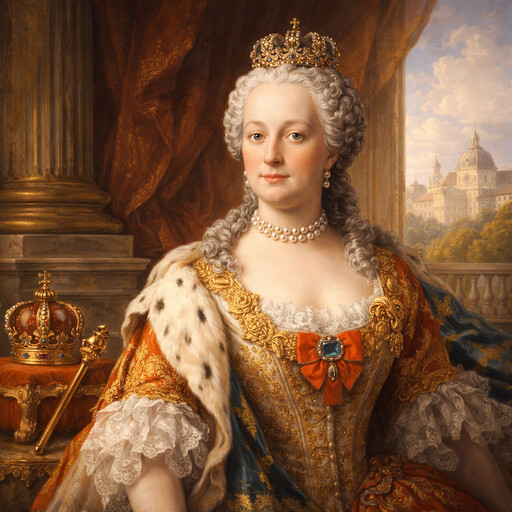
Maria Theresa
Powerful ruler of the Habsburg lands

Polish–Soviet War
War over borders after World War I