Harry S. Truman grew up on a Missouri farm where he helped plow fields, read history late at night, and played piano. He served in World War I as an artillery officer, then ran a clothing store and entered local politics with the support of friends who admired his honesty. As a U.S. senator, Truman gained national attention by leading a committee that investigated defense spending and waste.
Roosevelt chose Truman as his vice president in 1944, and only 82 days later Roosevelt died, leaving Truman to guide a world still at war. He quickly learned about the Manhattan Project and ultimately decided to use atomic bombs on Hiroshima and Nagasaki to force Japan's surrender. The bombings ended combat but introduced nuclear weapons into global politics, sparking debates that continue today.
Facing postwar chaos, Truman backed the Marshall Plan to rebuild Western Europe and announced the Truman Doctrine, promising aid to nations resisting communism. He supported the creation of the United Nations, recognized the state of Israel, and helped form the North Atlantic Treaty Organization (NATO) as a defensive alliance. At home he proposed the Fair Deal to extend Social Security, raise the minimum wage, and expand housing, though Congress rejected many ideas.
Truman also issued Executive Order 9981 in 1948, desegregating the U.S. armed forces and setting an example for later civil rights steps. When North Korea invaded South Korea in 1950, he sent U.S. troops under United Nations command to defend the South. A disagreement with General Douglas MacArthur over civilian control led Truman to remove the popular general, reinforcing that elected leaders, not military officers, set policy.
After choosing not to run in 1952, Truman retired to Independence, Missouri, where he wrote memoirs and took daily walks around town with minimal security. He is remembered for the sign on his desk reading "The buck stops here," a reminder that the president must take responsibility even when choices are difficult.
Harry S. Truman
Level
readlittle.com
Plain-spoken leader after World War II
What We Can Learn
- Truman inherited the presidency during the final months of World War II
- He used atomic bombs and then focused on rebuilding Europe and containing communism
- Domestic proposals in the Fair Deal aimed to extend New Deal protections
- He desegregated the military and asserted civilian control during the Korean War
Related Reads
No image
Boston
An early American coastal city
No image
Vienna
Capital city on the Danube River

Johann Gottfried Herder
German thinker of culture and language

Holodomor
Famine in Soviet Ukraine, 1932–1933

Vilnius
Historic capital city of Lithuania

Ivan III
Founder of a unified Russian state
No image
Monarchy
Government ruled by a royal family

Józef Piłsudski
Leader of modern independent Poland

Molotov–Ribbentrop Pact
Non-aggression agreement before World War II

Adam Mickiewicz
Poet of Polish Romantic literature
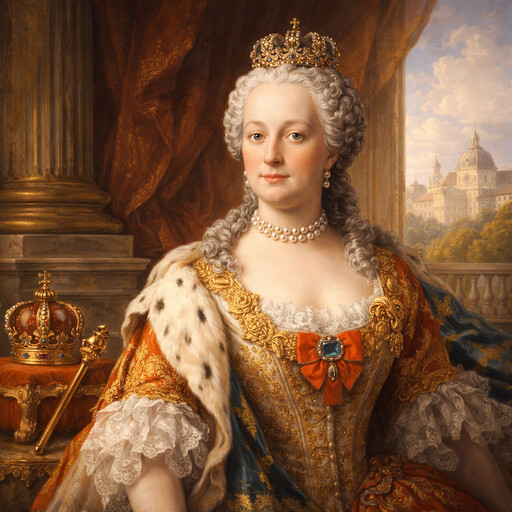
Maria Theresa
Powerful ruler of the Habsburg lands

Polish–Soviet War
War over borders after World War I