Christopher Columbus was a navigator and sailor from Europe who lived in the late 1400s and early 1500s. He was born in 1451 in the city of Genoa, which is now part of Italy. At that time, Genoa was a busy port city with many sailors and traders. Columbus spent much of his early life at sea. He learned how to sail ships and how to read maps and stars. He believed that he could reach Asia by sailing west across the Atlantic Ocean. This idea was based on the belief that the Earth is round, but he greatly misjudged its size.
Columbus tried for many years to find support for his plan. Support means money and ships to carry out an idea. Several rulers refused him at first. In 1492, King Ferdinand and Queen Isabella of Spain agreed to support his voyage. Spain wanted new trade routes and access to valuable goods such as spices and silk. Columbus was given three ships called the Niña, the Pinta, and the Santa María. He was also given the title of admiral and the promise of rewards if the voyage succeeded.
In August 1492, Columbus and his crew left Spain. After many weeks at sea, they reached land on October 12, 1492. The land was an island in the Caribbean Sea, part of the Americas. Columbus believed he had reached islands near Asia, which Europeans then called the Indies. Because of this belief, he called the local people Indians. These people were Indigenous peoples, meaning they lived there long before Europeans arrived. Columbus never realized that he had reached a continent unknown to Europeans at that time.
Columbus made a total of four voyages across the Atlantic. He visited several Caribbean islands and parts of Central and South America. He helped Spain claim these lands. Claim means to say that land belongs to a ruler or country. Columbus also took part in setting up early Spanish settlements. These settlements were small towns built by Europeans. His actions led to lasting contact between Europe and the Americas, including the movement of people, plants, animals, and diseases.
Columbus was also made governor of some of the new Spanish territories. A governor is a person who rules a region for a government. His time as governor was difficult. There were conflicts with settlers and harsh treatment of Indigenous people. Because of these problems, Columbus was arrested and sent back to Spain in chains in 1500. Although he later regained some honor, he never returned to a position of power.
Christopher Columbus died in 1506 in Spain. For many years, he was remembered mainly as the person who opened the way for European exploration of the Americas. Today, historians study many records to understand his voyages and their effects. His journeys marked the beginning of long-lasting contact between different parts of the world.
Christopher Columbus
Level
readlittle.com
European navigator who crossed the Atlantic
What We Can Learn
- Christopher Columbus was a European navigator from Genoa.
- He sailed west across the Atlantic Ocean in 1492.
- His voyages connected Europe and the Americas.
- He made four voyages under the Spanish crown.
Related Reads
No image
Vienna
Capital city on the Danube River

Munich Agreement
1938 agreement over Czechoslovak territory

Revolutions of 1848
Uprisings across Europe in 1848

Molotov–Ribbentrop Pact
Non-aggression agreement before World War II

Vilnius
Historic capital city of Lithuania
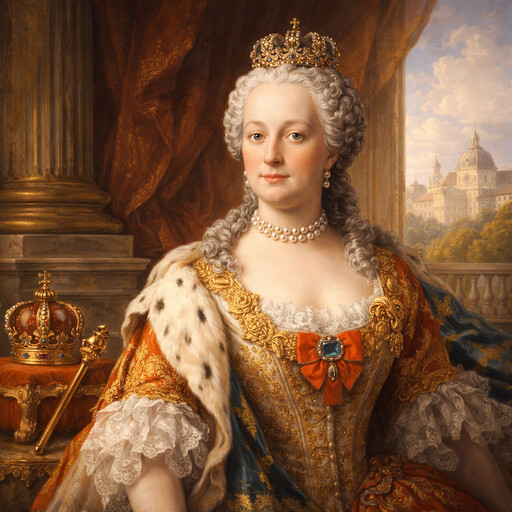
Maria Theresa
Powerful ruler of the Habsburg lands

Polish–Soviet War
War over borders after World War I
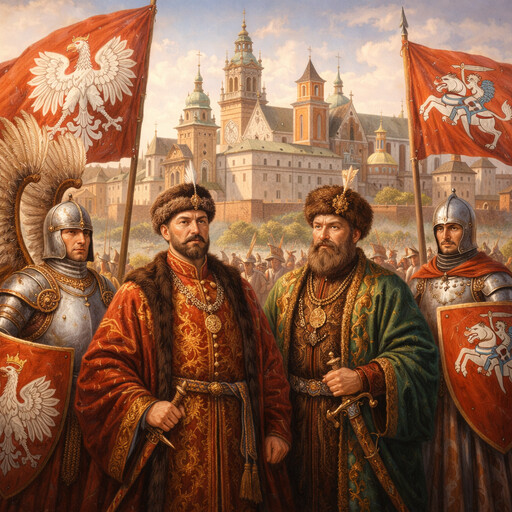
Polish–Lithuanian Commonwealth
A large early modern European state

Fall of the Berlin Wall
End of Germany’s divided barrier
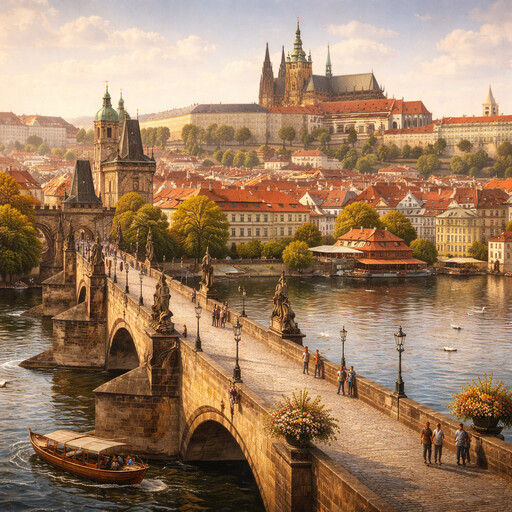
Prague
Historic capital city of the Czech Republic
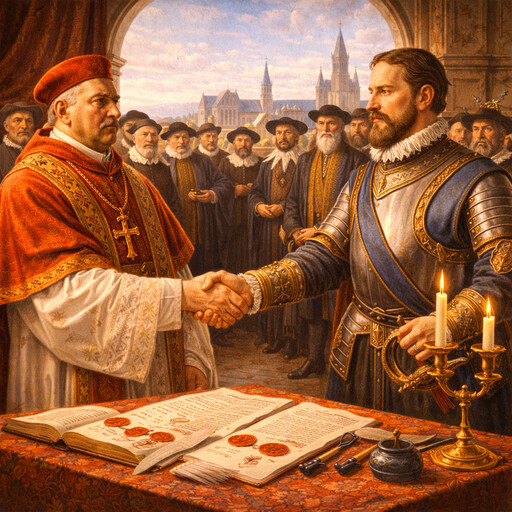
Peace of Westphalia
Treaties ending major European wars

Johannes Gutenberg
Inventor of movable-type printing in Europe