The War of the Austrian Succession was a large conflict fought mainly in Europe from 1740 to 1748. It started after the death of Charles VI, Holy Roman Emperor. Charles VI ruled many lands in Central Europe. He had no sons, but he wanted his daughter to inherit his lands. The main question was who had the legal right to rule after his death.
Before Charles VI died, he issued a document called the Pragmatic Sanction. A sanction is an official rule or order. This document stated that his daughter, Maria Theresa, could inherit his lands. Many European rulers had agreed to accept this rule. However, after Charles VI died in 1740, some rulers changed their position and challenged Maria Theresa’s right to rule.
Several countries opposed Maria Theresa. The strongest challenge came from Frederick II of Prussia, also known as Frederick the Great. He led Prussian forces into the region of Silesia, which was part of Austria. Other countries joined the conflict, including France, Spain, Bavaria, and Saxony. On Maria Theresa’s side were Austria, Great Britain, the Dutch Republic, and later Russia. These groups formed opposing alliances.
Fighting took place in many areas. Battles were fought in Central Europe, Italy, the Low Countries, and parts of Germany. The war also spread beyond Europe. In North America, fighting between British and French colonies formed part of the conflict. This colonial fighting is often called King George’s War. Naval battles also occurred at sea, where ships fought to control trade routes and ports.
The war involved large armies and long campaigns. Armies moved through towns and farmland, often causing damage. Control of territory changed several times. Although Maria Theresa managed to keep most of her lands, Austria lost Silesia to Prussia. This loss strengthened Prussia as a major European power. Other countries gained or lost smaller areas during the war.
The War of the Austrian Succession ended in 1748 with the Treaty of Aix-la-Chapelle. A treaty is a formal agreement that ends a war. The treaty confirmed Maria Theresa as the ruler of Austria and her lands. However, Prussia was allowed to keep Silesia. Although the fighting stopped, many disagreements remained. Only a few years later, another large war began in Europe.
The War of the Austrian Succession showed how inheritance disputes could lead to large conflicts. It involved many countries and spread across continents. The war changed borders and power relations in Europe during the mid-1700s.
War of the Austrian Succession
Level
readlittle.com
European war over imperial inheritance
What We Can Learn
- The war lasted from 1740 to 1748.
- It began after the death of Charles VI.
- Maria Theresa inherited most Austrian lands.
- The war ended with the Treaty of Aix-la-Chapelle.
Related Reads
No image
Vienna
Capital city on the Danube River

Vilnius
Historic capital city of Lithuania

Polish–Soviet War
War over borders after World War I

Peter the Great
Russian ruler who reshaped his country

Molotov–Ribbentrop Pact
Non-aggression agreement before World War II

Munich Agreement
1938 agreement over Czechoslovak territory
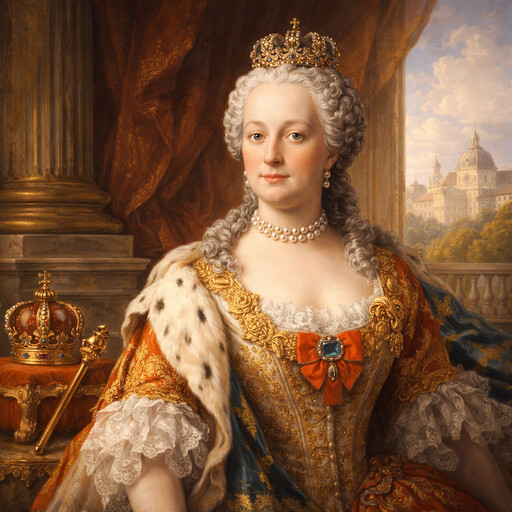
Maria Theresa
Powerful ruler of the Habsburg lands

Ivan III
Founder of a unified Russian state

Revolutions of 1848
Uprisings across Europe in 1848

Prague
Historic capital city of the Czech Republic

Fall of the Berlin Wall
End of Germany’s divided barrier
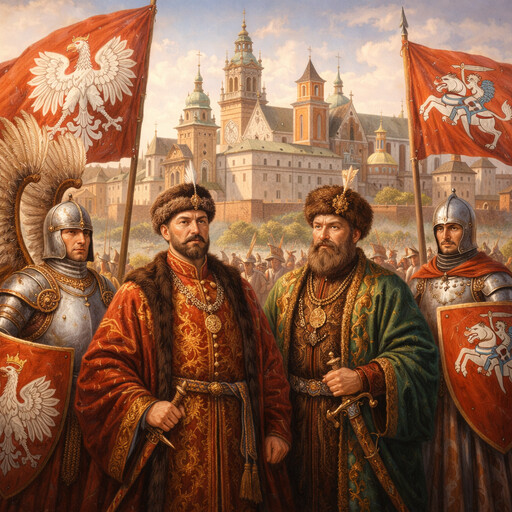
Polish–Lithuanian Commonwealth
A large early modern European state