Frederick William IV was the King of Prussia from 1840 until 1861. Prussia was a large and powerful kingdom in central Europe. He was born on 15 October 1795 in Berlin and was part of the House of Hohenzollern, a royal family that ruled Prussia for many years. Frederick William IV became king after the death of his father, Frederick William III. His reign took place during a time when many people in Europe were asking for new political rights and written rules for government.
Frederick William IV grew up as a prince in the Prussian royal court. He received a strong education in history, religion, and the arts. Religion played an important role in his life, and he believed strongly in the idea that kings ruled by divine right, meaning that their power came from God. He enjoyed architecture, painting, and classical culture. As a young man, he traveled in Italy, where he studied old buildings and art, which later influenced his interest in architecture.
When Frederick William IV became king in 1840, many people hoped for political reforms. Reforms are changes meant to improve a system. At first, he allowed some limited freedom of speech and eased censorship, which means control over what can be published. However, he did not want to give up much royal power. Prussia did not have a national constitution at that time. A constitution is a set of basic laws that describes how a country is governed.
In 1848, a wave of revolutions spread across Europe. These events are known as the Revolutions of 1848. In Prussia, many citizens protested and demanded a constitution, a parliament, and civil rights. A parliament is a group of people chosen to make laws. Frederick William IV faced large demonstrations in Berlin. After violence in the streets, he agreed to support a constitution and allowed elections for a national assembly. This assembly was meant to write new laws for Prussia.
During the same year, Frederick William IV was offered the title of Emperor of a united Germany by the Frankfurt Parliament. This parliament had been formed to create a single German nation from many smaller states. Frederick William IV refused the crown. He said he would not accept a crown offered by elected representatives rather than by other kings and princes. Because of this refusal, the plan for a united Germany failed at that time.
After 1848, Frederick William IV slowly restored stronger royal control. The Prussian constitution that was introduced kept the king’s main powers. In the late 1850s, his health declined. In 1857, he suffered a stroke, which is a sudden illness affecting the brain. He could no longer rule actively. His brother, William I, became regent, meaning he ruled in the king’s place. Frederick William IV died on 2 January 1861 in Potsdam and was buried in Berlin.
Frederick William IV
Level
readlittle.com
King of Prussia during a time of change
What We Can Learn
- Frederick William IV ruled Prussia from 1840 to 1861
- He lived during the political unrest of 1848
- He refused the offer to become German emperor
- His reign ended after serious illness
Related Reads
No image
Vienna
Capital city on the Danube River

Molotov–Ribbentrop Pact
Non-aggression agreement before World War II

Polish–Soviet War
War over borders after World War I
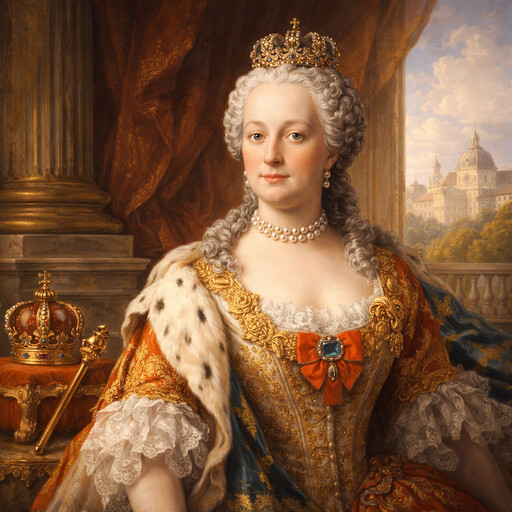
Maria Theresa
Powerful ruler of the Habsburg lands

Revolutions of 1848
Uprisings across Europe in 1848

Vilnius
Historic capital city of Lithuania

Munich Agreement
1938 agreement over Czechoslovak territory

Fall of the Berlin Wall
End of Germany’s divided barrier

Prague
Historic capital city of the Czech Republic
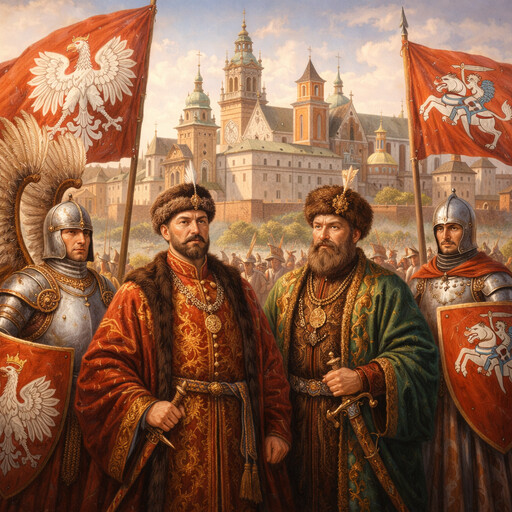
Polish–Lithuanian Commonwealth
A large early modern European state
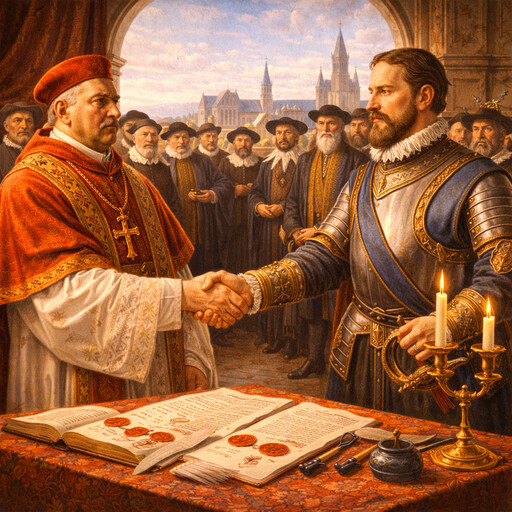
Peace of Westphalia
Treaties ending major European wars

Johannes Gutenberg
Inventor of movable-type printing in Europe